
Galvanized Steel Cable Trays for Heavy-Duty Industrial Power Management
It is power distribution that acts as the backbone in any heavy-duty industrial environment can be a manufacturing plant, a power station, a refinery, or a large infrastructure facility that keeps the operations going without any kind of interruptions.
Galvanized steel cable trays are the ones that are intrinsically involved in industrial power management as they are the tools which are conceived to securely support, route, and shield power cables. Galvanized steel cable trays also bring order to the most disorderly of cable systems, increase safety, facilitate the execution of the service, and guarantee durability in extreme conditions. In such industries where the cessation of work means a direct loss of money, these systems cannot be considered merely as accessories, but have to be reckoned with as necessity.
Benefits of Using Galvanized Steel Cable Trays for Industrial Power Systems
When industrial power systems require that the components be strong, durable, and consistent, heavy-duty cable trays fabricated from galvanized steel are the ones that satisfy the demand. Here are some of the benefits:
- Strength built for serial loads: Industrial power cables are quite heavy, most of the time they are bundled, multi-core, and are made to carry high current loads. Cable trays made of galvanized steel are the ones that are done to support these weights without any sagging or reshaping. Their capacity for bearing a heavy load makes them suitable for big-scale power plants, steel mills, and process industries where cable density is at a high level.
- Prolonged durability in critical situations: The industrial surroundings are not at all gentle. Being exposed to dust, chemicals, moisture, temperature changes, and even mechanical stress is quite normal. The galvanized steel has a protective zinc coating that gives the metal beneath it a shield against corrosion and thus the heavy-duty cable trays’ service life is prolonged significantly.
- Better safety and fire resistance: Compared to plastic or non-metallic counterparts, cable trays made of galvanized steel do not burn. These cable trays reduce the fire risk in high-voltage installations and provide better grounding and electrical continuity that is very important for the safety of the industrial sector and the requirements it has to meet.
- Better cable management and ease of use: Precisely heavy-duty cable trays allow for the organization of power cables, their correct spacing, as well as ventilation. The latter makes the occurrence of overheating less probable, prevents the insulation from getting damaged and, at the same time, inspecting or upgrading becomes a lot easier.

Understanding Industrial Cable Tray Systems and Their Applications
Industrial cable tray systems are carefully crafted solutions based on different operational needs, layouts, and energy requirements.
Types of Industrial Cable Tray Systems:
- Ladder-type cable trays: Ladder trays are mainly used in heavy metal power applications. These trays provide a high level of strength and cooling. They are the best for long cable runs and high-current power cables.
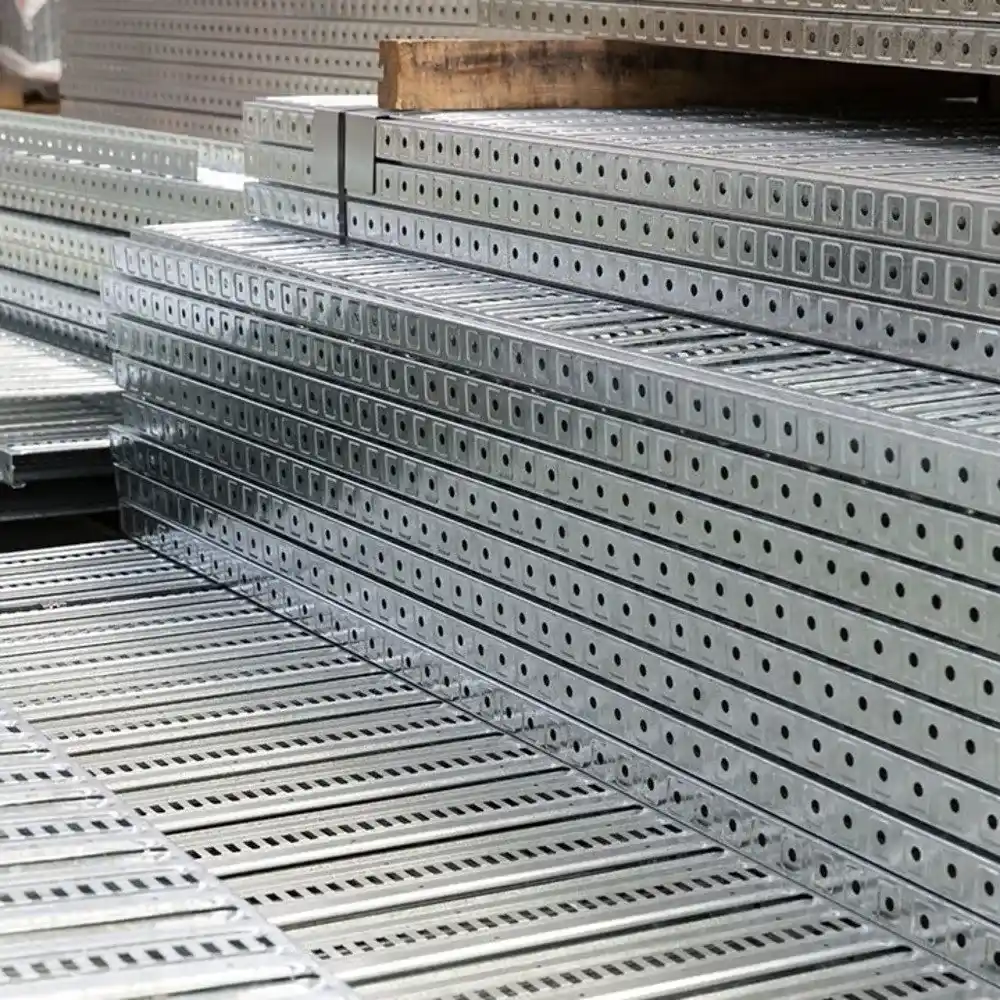
- Perforated cable trays: The perforated trays balance their weight capacity with air and are generally used where the weight of the cable is moderate, and the branching is frequent.
- Solid-bottom cable trays: They are the cables which need to be protected against the dust, the debris, or the dripping of the liquid are put in the solid-bottom cable trays.
- Wire mesh cable trays: These are mostly used in the control or data systems; however, they can be found in industrial setups for lightweight applications.
Applications Across Industries:
The applications of industrial cable tray systems are limitless, and they are used widely in power generation plants, oil & gas refineries, cement and steel plants, automotive manufacturing facilities, data centers and utility substations.
Large commercial and infrastructure projects:
Their function is not only that of cable support but also, they become the means for scalability, easy access for inspection, and are in line with the safety standards in the electrical domain.
The Advantages of GI Cable Trays in Industrial Power Distribution
GI cable trays, which are made of galvanized iron, are the most compatible solution in industrial power distribution systems in terms of performance and budget. The advantages of GI cable trays in industrial power distribution:
- Cost-effective without compromising quality: GI cable trays offer very good corrosion resistance to the environment at a cheaper price than the stainless steel solutions. Thus, for large-scale industrial projects with long cable runs, the cost saving that results from this choice can be quite substantial without compromising the level of trustworthiness.
- Ease of fabrication and installation: The galvanized iron metal is very convenient to shape, cut, drill, etc. when making trays of different designs, bends or accessories. The GI cable trays can be easily installed along with the modular system components, hence the installation will be done quicker and will further facilitate the changes in the plant due to expansions or retrofits.
- Reliable performance across indoor and outdoor applications: GI cable trays can be put to good use everywhere, even in electrical rooms situated inside buildings, or in outdoor substations, where the weather is more severe. Their zinc layer serves as a protection against rust, even in situations where the air is very humid and slightly corrosive.
- Low maintenance requirements: After the installation, GI cable trays are almost self-sufficient. A regular check is normally enough to be sure that everything is in order, thus the operational and maintenance expenditures will be very low over time.

Hot-Dip Galvanized Cable Trays: Durability and Protection Against Corrosion
When the environment pushes the metals to the extreme, carbon steel hot-dip galvanized cable trays give the best of the highest levels of anti-corrosion protection.
After hot-dip galvanization, the steel trays, which have been fabricated, are dipped in the molten zinc. A thick, metallurgically bonded zinc layer is formed, which covers all the surfaces even the edges, the connections, and the welds. As opposed to surface treatments or paints, the zinc layer penetrates into the steel and thus offers complete coverage, very good adhesion, and corrosion resistance for a very long time.
Galvanized steel cable trays provide superior protection against corrosive elements. Thus, they are perfect for use in areas close to sea, factories with chemical processes, wastewater treatment plants, and outdoor areas exposed to rain or dust.
GI cable trays will stay intact for more than a decade when used in a harsh environment such as an industrial one. The thick zinc layer can still be intact and the metal underneath can be protected against scratches, making it perfect for places like offshore oil rigs, transmission yards of high voltages and heavy process industries.

Power Cable Management Systems: Optimizing Efficiency with Cable Trays
Power has to flow not only in large industrial facilities, but it also has to flow efficiently, predictably, and safely making power cable management systems necessary. These systems are supported structurally by cable trays which are the means through which the power cables carrying either high or low voltages across the plants and facilities are routed in a regular way.
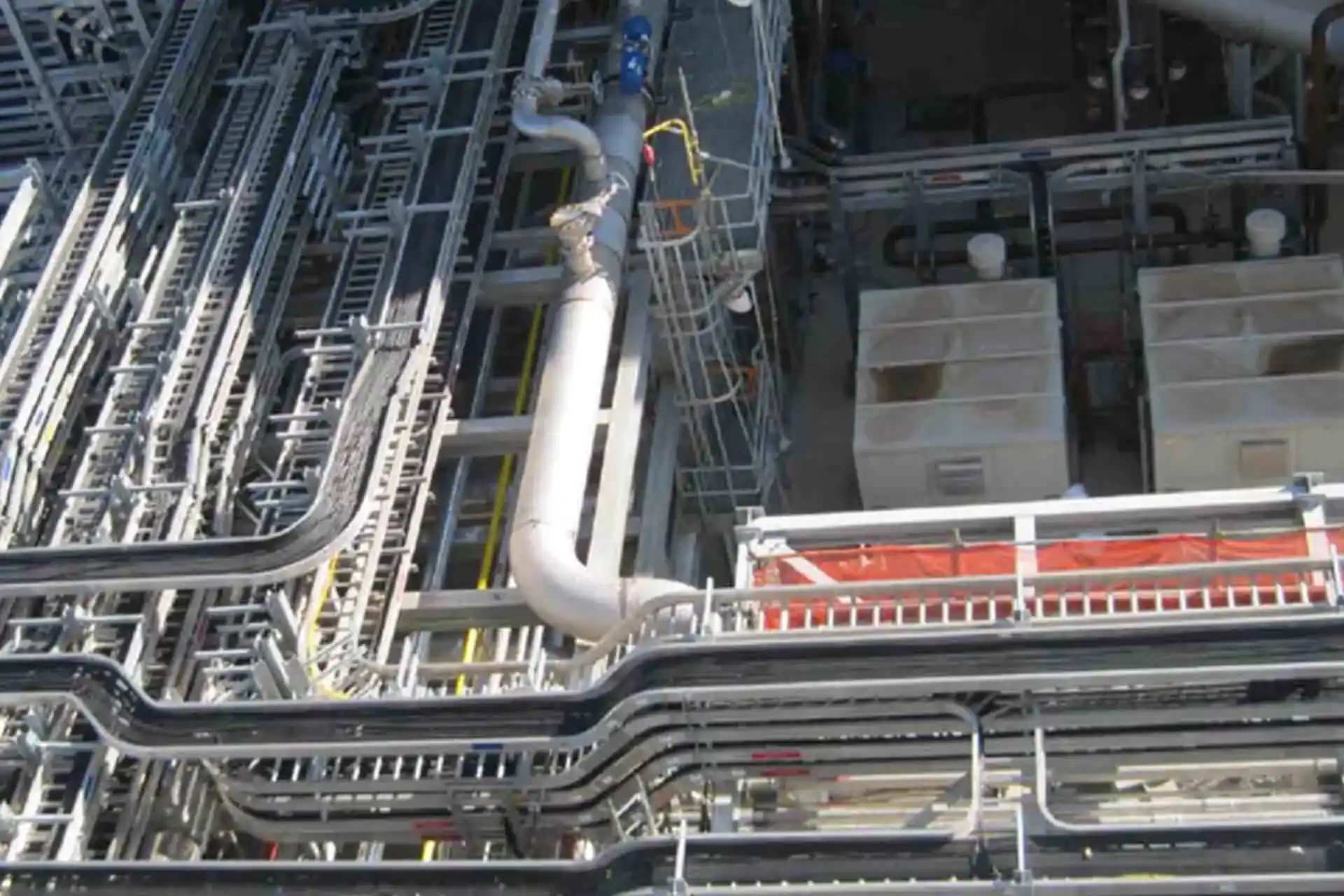
Cable trays, by removing the cables from the floor and the side of the machine, make the cables less subject to mechanical stress, heating, and they also prevent the occurrence of accidental damages. They also give the opportunity for the correct distances to be kept and for ventilation to be provided, which is very important for the electrical performance to be kept at the right level and for energy losses not to take place. The most significant thing, however, is that properly organized power cable management systems bring about the least chances of short circuits, insulation failure, and fire hazards, which are among the major concerns in industrial environments with high load. Moreover, when power cables are routed in a clear manner and they are obtainable, then solving the problems will be done in a much quicker manner, maintenance will be done in a safer way, and operational downtime will be lower to a great extent.
Cable Tray Solutions for Electrical Power Distribution in Industrial Plants
Durable electrical cable tray solutions are utilized by industries to handle the intricacies of their power distribution networks. Cable trays are the means by which the whole cabling from power can be logically and securely framed thus resulting in a network of thousands of meters of power cabling being supported. In this way, cable trays arrive at a logical and safe framework that supports power cabling for the whole area which extends to thousands of meters in length.
These electrical cable tray solutions are instrumental in separating power cables from control and data lines, thus cutting down the electromagnetic noise and system performance is improved. Generally, ladder-type trays are preferred for heavy power cables as they are strong and allow good ventilation while perforated trays are ideal for branch circuits and equipment connectors. The cable trays protect the cables from dust, impact, and vibration, thus the cable life is prolonged and power supply throughout the plant remains stable.
Moreover, standard electrical cable tray solutions are equally important in making the future expansion plans straightforward. When plants grow or change their layout, trays help in adding new cables without taking apart the existing systems thus saving both time and money.
Corrosion-Resistant Cable Trays: Ideal for Harsh Industrial Environments
Industrial settings are not typically kind to materials increased humidity, the presence of chemicals, extreme temperatures, and airborne particles can, in fact, breakdown the most common materials rapidly. Hence, corrosion-resistant cable trays are most often utilized, with those made of galvanized steel being the most popular.
Galvanized steel cable trays are covered with zinc, which is the element that keeps rust and corrosion away. This is absolutely necessary protection in extreme environments like chemical plants, offshore installations, power plants, and wastewater treatment facilities. If the surface happens to be scratched, the zinc layer will still protect the steel under it by sacrificial action.
Hot-dip galvanized alternatives, in fact, are able to go beyond this, providing heavier, even layers that can endure the exposure to moisture and industrial pollutants for a long time. These corrosion-resistant cable trays are the ones that, together with structural safety, remain over decades, hence, the need for replacements decreases and the lifecycle costs are getting lower.
Cable Tray Systems for Power Distribution: Ensuring Safety and Reliability
A cable tray system that is well designed will not only support the power cables but will also do so without the cables being bent, overheated or the insulation being damaged, thus power reliability will not be compromised.
In terms of safety, cable tray systems for power distribution enable the routing of cables in a clear manner, provide effective grounding, and easy inspection access. Thus, electrical safety standards can be met in facilities, and the risk of faults and accidents is lowered. In very critical industrial operations that rely on an uninterrupted power supply to continue, these systems are the ones that assure that the flow of electricity will be stable and dependable.
Part of the reason for reliability is also the result of visibility. Unlike concealed conduit systems, cable trays give engineers the opportunity to quickly locate the source of the problem, evaluate the condition of the cables, and carry out preventive maintenance. In industrial settings that operate at a high pace and are of a great complexity, this openness or transparency leads directly to an increase in the time the system is up and running as well as operational confidence.
Perforated Cable Trays: Enhancing Airflow and Cable Cooling
Heat is still one of those problems in high-load electrical systems that is often underestimated. Perforated cable trays are the perfect answer to how to overcome this issue. The holes and openings that are evenly distributed on their surface ensure that air can freely flow around the power cables without any obstacle and, thus, the heat generated during operation can easily be released. This simple, natural ventilation keeps the heat away, which, if left to accumulate, can cause the deterioration of insulation, the shortening of cable lifespan, and the increase of the risk of electrical faults.
Cable trays with perforated sides do not only serve the purpose of cooling. They combine protection with visibility. On the one hand, they prevent the cables from impacting the outside, and on the other hand, they give the freedom of inspection and maintenance without any disturbance. This is the main reason why they are the best choice in industrial plants where the medium-to-heavy power cables are running next to the control wires. As a result of the better and unobstructed airflow and the simplified cable monitoring, which is done by perforated cable trays, these devices become the primary agents of safer and more efficient power distribution.
Ladder Type Cable Trays: Strength and Flexibility in Cable Management
When a ladder type cable tray is used where strength is not up for negotiation, they are the industry's first choice. With two longitudinal side rails connected by transverse rungs these trays inherently have a very high load capacity thus they are the perfect solution for heavy, large power cables that need to be suspended over a long distance. Heavy industrial environments such as power plants, refineries, cement factories, and large manufacturing plants are where ladder type cable trays perform most. Their open design feature allows heat to dissipate naturally from the cables inside while at the same time it is also very easy to route, tie and add new cables if need be. The rung structure thus is a flexible solution in that cables can branch off in different directions from the panel or equipment. Ladder type cable trays are structurally strong but still very flexible, thereby cutting down on the frequency of support brackets which in turn lowers the cost of the installation while increasing its reliability over time.

Ensuring Cable Tray Standards and Compliance in Industrial Settings
In industry power systems, safety and performance have to be inseparable. Following cable tray standards and compliance is the main thing to be sure that the installations are dependable, approved by law, and safe for a long-term period.
The different sets of rules on an international and local level such as IEC, NEMA, IEEE, and IS codes determine the requirements for load capacity, material thickness, corrosion protection, grounding, and fire safety. Respecting the regulations allows cable trays to support cables in a safe manner both under normal and fault conditions, including thermal expansion and short-circuit forces.
Moreover, correct cable tray standards and compliance also imply good installation practices, proper support spacing, accurate bonding and earthing, and separation of power and control cables. Periodic checking and servicing according to these standards contribute to the prevention of malfunctions, the reduction of fire risk, and the increase of system life.
As a matter of fact, compliance is not only about that, it is really about putting trust in the power infrastructure. Industrial facilities equipped with well-designed, standards-compliant cable tray systems gain the certainty that their electrical networks are safe, efficient, and future-ready.

Frequently Asked Questions:

About Us
KP Green Engineering Ltd. provides complete engineering and steel structure manufacturing solutions worldwide, serving industries such as renewable energy, telecommunications and beyond.
Get In Touch

Transmission Line Towers

Windmill Lattice Towers

Telecom Towers
Substation & Switchyard Structures

High Mast Towers

Mono Pole Towers
Solar Module Mounting Structures
Solar Trackers

Pre-Engineered Building
Cable Trays
Perforated Cable Trays

Ladder Type Cable Tray

Crash Barriers
Electrical Isolator

Double Break Isolator/Disconnector
Galvanized Earthing Strips and Flats

Solar Rooftop Solutions
Latest News
Rs 272 Crore Orders! This Green Energy Engineering Stock Wins Contracts Across 3 Key Businesses
KP Group Raises FY32 Ambitions with KP 3.0, Targets 10 GW Each in Owned Generation and EPC
KP Group’s listed renewable businesses post strong multi year growth on the back of disciplined capital allocation, operational efficiency
Recently Uploaded Blogs


