
Modular Solar Mounting Structures for Faster, Cost-Efficient Utility-Scale EPC Projects
Speed, accuracy, and predictability are key things that large-scale solar construction must have. Utility scale EPC companies are under very tight deadlines, PPA commitments, and harsh ground conditions where a delay will cause the expenses to increase very quickly. It is against this situation that modular solar mounting structures have become one of the most significant engineering solutions for the new-age solar parks. With these modular systems, the accuracy of the manufacturing-level is brought to the field, the project timelines get expedited, and the cost efficiency is improved drastically. Essentially, they are helping India– and the rest of the world to redefine solar infrastructure building at scale.
Simply put, Modular Solar Mounting Structures are the pre-engineered solar mounting systems that come to the project site with all parts already cut, drilled, and ready for a fast assembly. For EPC teams which are always struggling with the challenges of site-based fabrication, this change is revolutionary. Rather than the on-site cutting, welding, or calibrations which are unpredictable by nature, modular systems avail a plug-and-play method that makes it possible to have the same installation quality even if one is dealing with thousands of module tables. Besides, as solar parks are now spreading over hundreds of acres, this repeatability is what has made it possible for coming up with reliable Utility-scale solar EPC solutions in the different zones that are characterized by either high wind or high temperature.

What Are Modular Solar Mounting Structures for Utility-Scale EPC Projects?
Speed, predictability, and structural reliability over the long run are some of the aspects that must be present in utility-scale solar EPC solutions working in large areas that can range from dry plains to uneven semi-urban terrains require mounting solutions that not only make the construction process faster but also do not compromise the performance of the solar plant. And this is exactly the point at which modular solar mounting structures have revolutionized the field.
Traditional mounting systems are mostly dependent on fabrication at the site, adjustments, and constantly changing manpower dynamics, whereas modular structures are precisely engineered off-site. They are equipped with all the features to be directly installed in the solar park–made for easy and quick-fixing and are all pre-cut, pre-drilled, and designed to be interconnected without gaps like a high-quality industrial construction set. For EPC teams that have to deal with layout inconsistencies, surprise design tweaks, and unpredictable field conditions, the use of modular systems means getting help, arriving at a solution, and having clarity.
On a practical level, modular solar mounting structures create standard, repeatable modules. The modules' shapes, their hole patterns, the lengths of their spans, and the points of their connections are all determined beforehand thus the installation is done drastically faster and cleaner.
Moreover, these structures smoothly become parts of bigger utility-scale solar EPC solutions, they can be used to support the installation of solar panels on the ground that is shallow foundations, areas of high-wind zones, as well as the bifacial module layouts. Their lesser modules give more control of the schedule, resource allocation, and cost projection to the project managers.
Modular mounting systems benefits in a nutshell:
- Change of land shape
- Weather unpredictability
- Labor shortage
- Tight project timelines
- Rising material and logistics costs
- Repeatability and consistent modules

Key Features of Pre-Engineered Solar Mounting Systems
The foundation of any modular infrastructure is a point where we find pre-engineered solar mounting systems. It is a group of mounting solutions that are very carefully planned out before manufacturing and are designed to be used in large-scale projects. These systems are the combination of smart engineering and the discipline of a manufacturing process and they bring out the qualities of being clear, consistent, and scalable into solar construction.
They bring, for large-scale utilities:
1. Factory Precision for Maximum Reliability:
Usually in solar EPC projects that are set up in a conventional way, field teams are obliged to perform on-the-fly site operations like cutting, aligning, or modifying components. Consequently, this results in realignment errors, structural inconsistencies, and time delays. Pre-engineered systems completely do away with these problems by:
- Factory-level precision guarantees
- Exact alignment of the mounting holes
- Standardized bearing of the load capacity
- Consistent thickness of the galvanizing layer
- Conformational behavior under changes in wind and temperature slot variations predictable
This great precision is the very basis for the long-term health of the asset, the safety of the module, and the achievement of high energy yields.
2. Plug-and-Play Assembly for Faster Execution:
One of the major innovations in Solar module mounting that led to the present situation is the transition to the plug-and-play method of connection. What used to be welding tasks or field work of alignment improvising are now replaced by the installers working on components that are immediately interconnected through bolted joints and standardized interfaces.
Advantages are:
- Installation speed greatly increases.
- Less dependence on skillful labor.
- Less need for instrumental and heavy machinery.
- Lower defects caused by human errors and almost zero re-works.
For EPC teams that are under pressure to meet commissioning deadlines, this method of work leads to the drastic shortening of a project timeline.
3. Lightweight, High-Strength Material Advantage:
Typically, the utilization of a properly designed modular pre-engineered solar mounting system involves the use of optimized high-strength galvanized steel, which weighs lightly while maintaining its structural robustness. As a result, an EPC team can load a truck with more material and thus decrease the number of trips required to transport other materials needed for the project, they can also ease the work of the structure itself and lessen the foundation loads.
The combination of lightness and strength also improves:
- Wind resistance.
- Beam efficiency.
- Corrosion resistance.
- Overall project economics.
This material intelligence is a defining characteristic of modern modular mounting systems.
4. High Compatibility with Modern Solar Modules:
With the extension of solar modules, emergence of bifacial technologies, and the increased popularity of large-format designs, the main concern for the mounting structures must be their readiness for heavier weights, longer spans, and the new power-optimized orientation of the modules.
Pre-engineered setups maintain their competitiveness against these trends by the use of:
- Bifacial-friendly heights
- Optimized inter-row spacing
- Specific clamp and rail configurations for the module
- Enhanced tilt angle options
This adaptability ensures future-proofing in fast-evolving solar markets.
5. Designed for Difficult Terrain:
Normally, EPC companies are not given the luxury of flat land to work with. Large-scale parks often come hand in hand with rocky surfaces, slopes, undulations, or differing soil densities. Modular and pre-engineered mounting systems alleviate these difficulties through custom-engineered features such as:
- Height of the column that can be changed
- Compatibility with multiple foundation
- Adjustable bracing
- Customized load pathways for areas with weak soil
That is why they are an invaluable asset, particularly when it comes to the large and diverse project sites.
6. Lowered Project Risks and Elevated Safety Standards:
There are risks involved in on-site fabrication– the hazards of hot work, uneven cutting, unexpected design changes, and the need for continuous quality supervision. These are some of the risks that pre-engineered systems get rid of mainly because they take fabrication off the field completely.
The upshot is:
- Less safety incidents
- Work sites that are cleaner
- Easier quality audits
- Lower supervision demands
For EPC companies that are managing hundreds of workers and are under the pressure of tight timelines, this is a controlled environment that cannot be priced.
7. Solar Module Mounting Innovations that Enhance Energy Output:
Besides being structurally stable, contemporary pre-engineered systems are meant to bring maximum energy output. The innovations are:
- The height is optimized to get more energy from bifacial modules
- The shading losses are minimized thanks to the improvement of geometry
- The purlins are streamlined so that dust has less surface to accumulate
- The support layouts are such that they provide the back of the modules with the most efficient exposure
- Such innovations, when taken together, result in pushing energy yields upward while at the same time making sure that structural costs stay under control.
8. Scalability Across Multi-MW and GW Projects
The main reason why modular systems are scalable is that they use standard patterns and have repeatable assembly logic, hence the EPC companies can come to an almost instant decision as to the extension of the installation of the work. The training becomes much simpler, the material planning gets more realistic, and the installation rate is accelerated with time.
Such scalability is extremely important for utility-scale construction, where speed-to-grid is directly proportional to revenue and project viability.
Why Modular Solar Racking Systems Enable Faster Solar Project Execution
Modular solar racking systems are essentially the main components through which the fast solar plant deployment has been made possible. They are thus a powerful tool for EPC companies to reduce timelines in a way that traditional structures simply cannot. The one thing that modular solar racking systems have going for them is their standardization: the component parts come to the site having already been cut, drilled, and engineered which, in turn, eliminates all the on-site fabrication uncertainties that are time-consuming and messy. The EPC team can now arrange their work in a neat, plug-and-play assembly flow.
In this way, they greatly improve site productivity, labor bottlenecks are minimized, and multiple array blocks can be worked on simultaneously, hence a large solar site can be converted into an installation environment that is orchestrated and predictable. Thus, for an EPC company that is in a position to deliver multi-MW projects under strict deadlines, modular systems have the effect of shifting the whole execution curve forward.
As a result, for large-scale projects that are spread over hundreds of acres, this can be seen as a major competitive advantage in terms of predictability: every day saved on mounting is one day less before the plant starts generating revenue.
Reduction in Solar Project Execution Time Through Modular Designs
- Factory-ready components eliminate the delays that are usually caused by fabrication, there is no need for cutting, welding, grinding, or drilling on-site. Plug-and-play assembly is very installation-friendly thus the installation process is very fast. Teams can then follow a clean, repeatable workflow. Alignment is done faster and corrections are fewer.
- The pre-assembled subframes substantially raise the daily installation rates of the labor thus the deployment can be done batch-wise across large sites. There is reduced dependency on skilled labor as crews only assemble, not fabricate.
- There is less rework and rectification time since the standardized components greatly reduce the number of mismatches and non-conformities. Parallel workstreams become achievable when civil, mechanical, and module teams coordinate and work simultaneously.
- There are streamlined logistics and staging due to uniform component bundles which are very convenient for unloading and distributing. The QA/QC cycle is much more efficient because of the consistent, repeatable quality of the components and the simplified inspection checklists.
- Module mounting and stringing are done at a faster pace due to the fact that the racking is dimensionally precise and structurally aligned from the start. There are predictable project timelines leading to a decrease in the risk of overruns and therefore, the commissioning can be done earlier.
Cost-Efficiency Benefits of Modular Solar Mounting for Large-Scale Projects
Modular solar mounting systems have turned into a financial advantage to large scale EPC projects because: waste is cut, labor hours are reduced, logistics are simplified, and unpredictable fabrication costs are eliminated. Their standardised structure guarantees regularity for thousands of mounting points, therefore, EPC crews can buy, move and put together the parts with much higher productivity. The installed determinacy leads directly to the lowered installation costs, improved manpower planning, and easier cash flow throughout the project cycle.
Since every module matches a repeatable installation pattern, EPC firms are free from expensive reworks, onsite improvisations, and structural inconsistencies which are among the top three reasons for budget drain in traditional solar construction. To put it simply, modular mounting platforms lower direct as well as hidden costs; resulting in cost-efficient solar project installation without any structural integrity concerns.
Optimizing Material Use with Lightweight Solar Mounting Frames
- Efficient material engineering: Lightweight solar mounting frames employ less steel without weakening and thereby, both sourcing and transport costs are reduced.
- High-strength galvanized steel structures: Keeps the structural performance even with thinner parts, because the metallurgical processes are advanced and the galvanizing is of high quality.
- Foundation loads are decreased: Small foundations are needed for lighter structures, thus less concrete, excavation work, and civil labor are required.
- Handling and assembly are quicker: The lighter parts can be moved, lifted, and installed with less mechanical equipment and labor hours are cut.
- Lower logistics footprint: A higher number of frames can be loaded into one truck thus, freight costs and site congestion are decreased.
- Overall less wastage: The precision-designed frames cause the cutting scrap, drilling errors and steel leftovers to be at a minimum.
- Value: The galvanized lightweight structures resist corrosion for a longer time, thus the O&M costs are reduced in the long run.
Design Flexibility and Scalability of Modular Solar Infrastructure
Modular mounting platforms open up an unparalleled level of solar mounting structure design flexibility to EPC (Engineering, Procurement, and Construction) companies, thereby enabling them to build faster, get along with their environment better, and scale without any hassle. If any new module formats are to be used, or if DC capacity is to be increased, or even if bifacial panels are to be integrated, the modular systems provide the plug-and-play adaptability that is required.
For the EPC companies that are in charge of multi-phase solar parks, this kind of flexibility gives them the opportunity for uniform engineering, easier standardization, and quicker workforce training across the various stages. Modular systems have become the bedrock of scalable solar infrastructure for the EPC companies, as they are equally efficient in handling the current project demands and future expansions.
Adapting Ground-Mounted Solar Structures to Different Terrains
- Flexible tilt and height adjustments to correspond to slopes, undulations, and uneven ground without the need for heavy land grading.
- Configurable foundations– piles, micropiles, ballasts, or grouted posts, depending on the soil and the geotechnical conditions.
- The modular beam and purlin choices give room for realignment of the structure on a rocky, sandy, or clay-heavy site.
- The optimized row spacing allows for energy yield to be consistent even when the land is hilly or irregular in shape.
- Strong and stable structures that are built to endure different wind speeds and soil-bearing capacities across various terrain types.
- Less civil work is required, because the modular systems can be changed to fit the land, instead of the land having to be changed for the structure.
- Ready for the future expansions, even if they are on terrain where the traditional mounting designs can hardly work.
Modular ground-mounted solar structures convert the difficult land conditions into buildable solar assets that are high-performing, thus maintaining the speed and efficiency of utility-scale EPC projects.
Engineering Innovations in Modern Modular Solar Mounting Systems
The last ten years have changed the way the world thinks about building solar power plants. Building massive solar installations used to be a messy affair that required a lot of heavy machinery, onsite fabrication, had timelines that couldn’t be predicted, and needed a highly skilled labor force, but now it’s mostly a manufacturing-driven streamlined process, and the biggest driver of this change is the innovation of modular solar mounting systems. In fact, solar module mounting innovations have gone beyond just being engineering improvements; they are, in fact, one of the main factors that lead to a quicker implementation, more reliable performance, and less expensive scaling in large-scale solar parks.
Contemporary mounting solutions make use of pre-engineered, precision-fabricated modules. These elements are made under a number of different controlled factory conditions through an automated system that cuts, roll-forms, drills, and galvanizes the material. What you get is an end product that fits just like manufactured Lego units– very stable, uniform, and extremely quick to put together.
The reason this change happened is due to the use of high-strength galvanized steel structures, hence they are not only lighter but have better strength-to-weight characteristics than those made of traditional heavy steel sections. The old designs had heavy and bulky angles and channels carrying unreasonably high weight-to-capacity ratios. Today’s engineered cross-sections, such as C-sections, sigma profiles, and cold-formed beams, require less steel while offering higher stiffness and wind load resistance. Besides that, advanced hot-dip galvanizing, and zinc-aluminum coatings give an extended structural life which thus makes them suitable for coastal, desert, agricultural, or high humidity areas.
Some of the innovations in the design include:
- Load Path Design that is Optimized: The new technologies better distribute mechanical stresses, thus they can reduce the amount of steel needed while also maintaining the same level of safety.
- Wind Tunnel Testing for Aerodynamic Stability: Before determining the stability of the given structure, computer simulations along with the physical wind-tunnel tests are done on the racking configurations for the occurrence of the sudden gusts, storms, or cyclones.
- Spacing for the Piles & Depth of Embedment that is Optimized: The soil condition can change a lot between the locations of the different projects. The modular systems not only provide different options for foundations but also have the ability to ensure the same level of stability for different types of terrains.
- Multi-Orientation Compatibility: If for instance, a solar project were to require portrait, landscape, two-in-portrait, vertical stacking or east-west mounting, modular systems at this point would be capable of adjusting without the necessity of redesigning the whole structure.
- Ready-to-Use Bifacial Designs: The bifacial modules performance is highly improved due to their higher ground clearance, reflective optimization, and minimized backside shading.
All of these next-generation features collectively upgrade modular mounting frameworks from being simple construction supports to becoming smarter, safer, and more resilient engineered systems.
How Pre-Fabricated Components Improve Installation Quality & Safety
The move to pre-engineered solar mounting systems has essentially changed the installation processes of EPC companies. On the contrary to the fabrications that are done onsite and are not always predictable, the crews now take up the task of assembling the already aligned, drilled, coated, and dimensionally standardized components.
The following are some of the ways in which prefabrication improves quality and safety:
- Precision at Scale: Every single element is cut and drilled by the use of CNC machines which guarantees that the accuracy is up to the millimeter. This uniformity totally does away with the common problems that arise from the site such as the hole patterns that are not aligned, the heights that are uneven, and the structural tilt variations.
- Assembly-Ready Components: The parts that have been pre-fabricated are either labeled or color-coded or in the case of assembly sequence, they are bundled. The technicians are able to follow simple instructions or visual diagrams and hence the need for specialist labor is greatly reduced.
- Zero Hot-Work Zone: There is no cutting, welding or grinding that is done onsite and hence the installation teams are not exposed to sparks, heat, fumes, and fire hazards. This to a large extent makes site safety compliance better.
- Fewer Structural Defects: Intermediates such as twisting, improperly cutting angles and welding inconsistencies have been removed completely through pre-fab which are three of the major sources of structural failures that have been going for a long time.
- Faster Completion with Lower Fatigue: The workers’ physical effort is lessened by the lightweight, factory-engineered profiles and, therefore, their safety is not compromised while they enjoy their productivity for a long period of time without breaks.
- Better QA/QC Control: The quality checks that are done inside the factory where the testing environments are controlled is what brings about less time for onsite inspections and the overall build quality is raised.
The use of pre-engineered systems means that there will be safer working conditions, the work will be done faster, and the structural performance will be much more reliable over the lifespan of the solar plant.
How EPC Companies Benefit from Modular Mounting Structures in Utility-Scale Solar Parks
Modular mounting installations have essentially been a major factor for EPC companies that are delivering multi-MW solar parks in their success. They simplify project execution by removing the most traditional part and keep operational predictability higher—which is very important to utility-scale solar EPC solutions. Since every component is built for easy integration, EPC staff can carry out the solar park commissioning in lesser cycles even if the parks are widely spread and the terrains are difficult.
Scalable solar infrastructure is without doubt the most valuable of the benefits. With modular structures EPC companies have a quick and smooth way of enlarging project capacity without going through the engineering plans or procurement strategies all over again. If the project is going to be constructed in stages or will be commissioned in one go, modular engineering is there to ensure that each block of the mounting system is functioning identically. It means solar infrastructure that is scalable and can increase from the tens of megawatts to the hundreds with very little redesign. Apart from speeding up the process of adding more capacity, the method also lowers the operational risks that developers and IPPs can experience in the long run as they will continue to rely on predictable outputs.
The modular mindset further helps to untangle the supply chain. The benefits are much more realised especially in remote, and labor-constrained areas where large construction teams are expensive and complicated to manage both from the logistics and cost perspectives. Thanks to the improved material certainty and the reduction of problems at the ground level EPC companies using modular structures can achieve large solar parks delivery at a faster rate, with better safety, and controlled budgets.
Comparing Modular vs. Traditional Solar Mounting Structures
Traditional ground-mounted solar structures, which are mostly based on custom onsite fabrication, are less reliable due to the variability that they bring, have longer work cycles, and are more likely to be misaligned. EPC teams that cut, drill, and adjust under field conditions also have to juggle efficiency and quality control together, which gets compromised. As the scale of the projects increases, these inefficiencies accumulate thus leading to delays in timelines, labour availability, and quality assurance.
While the modular solar mounting structures achieve a certain standardization that changes the construction model. They do away with the uncertainties by providing parts that are pre-engineered, precision-manufactured and require very little intervention for them to fit together. This change drastically cuts the time of the installation, reduces all the project uncertainties and error margins in the field.
Traditional structures are also not conducive to scalability. Differences in the size of the components, quality of the field fabrication, and module alignment that results from installation errors can cause O&M challenges to increase. Whereas modular systems, on the other hand, provide consistent geometry throughout the project, thus making it possible to scale reliably from one MW block to the next. This repeatability makes modularized ground-mounted solar structures more suitable for today's fast-growing solar markets where efficiency, repeatability, and cost control are non-negotiable.
Commercial & Operational Advantages of Modularization for EPC Firms
- Faster timelines: By standardizing assemblies, the number of installation hours is significantly reduced, thus a solar project execution time reduction of great magnitude is achieved.
- Lower procurement risk: Standardized components facilitate vendor coordination and lessen material logistics' uncertainties.
- Better cash flow management: The build speed that is made possible by the milestone-based payments ensures that the latter will be met without delays.
- Ease of scaling: Due to the scalable solar infrastructure and repeatability, EPCs are able to raise their project capacities.
- Reduced rework costs: The precision of the factory thus far has eliminated errors in the field that normally result in expensive re-adjustments.

Best Practices for Selecting Modular Mounting Structures for EPC Projects
Product capability and solar mounting structure design flexibility are important to consider in all mounting configurations. EPC projects can nowadays present various challenges for the ground, different module sizes, and tracker configurations. A good modular system should be able to adapt to all these variables without structural reliability being its less strong point. In fact, the best solutions enable the EPC team to vary ground clearances, the module layouts, and tilt angles while the structural integrity and the ease of installation remain unchanged.
Material used must be as important as design and functionality. Considering a 25-year project life for a utility-scale plant, EPC companies need to opt for high-strength galvanized steel structures which can stay even in harsh weather, corrosive soils and withstand high winds. Along with hot-dip galvanization that gives the structure its longevity, the steel is kept light and strong with optimised sections. The perfect system lowers LCOE by the interplay of durability, weight, and installation facilitation.
EPCs also need to know how well the modular structure fits into their current construction work schedule. Systems that are created to lessen the tool usage, facilitate the alignment, and lessen the handling will have better results in their large-scale deployments. Equally important are the unambiguous instructions, the engineering support, and the quality certifications which are some of the factors that facilitate the smoothness of the site execution and the reduction of site risks.
For commercial and industrial rooftop projects, these structural and execution criteria should also guide the selection of the best solar rooftop companies in India, particularly when evaluating their engineering capability, installation quality, project delivery and long-term O&M support.
Checklist: Quality Standards, Galvanizing Coats, Load Ratings & Site Readiness
- Steel Quality: Ensure the structure uses high-tensile, high-yield steel that’s easy to weld. Strong materials are essential for high-strength galvanized steel structures used in utility-scale solar EPC solutions.
- Galvanizing Protection: Look for hot-dip galvanizing in the 80–120 micron range. This ensures long-term durability for ground-mounted solar structures and keeps maintenance low.
- Wind & Snow Load Ratings: Confirm ratings comply with relevant IS/IEC standards. Pre-validated loads are crucial for pre-engineered solar mounting systems designed for coastal, inland, and high-stress sites.
- Terrain Compatibility: Check if the mounting system works on rocky terrain, sandy soil, black cotton soil, or slopes. Versatile foundations improve solar mounting structure design flexibility and speed up solar project execution time reduction.
- Module Fit: Make sure the structure can support multi-module layouts—M10, N-Type, bifacial, or future module formats. This ensures scalable solar infrastructure for EPC companies and long-term adaptability.
- Installation Aids: For fast solar plant deployment, opt for systems with pre-marked holes, bolts, clamps, and simplified assemblies. These features are the backbone of modular solar racking systems and cost-efficient solar project installation.
Frequently Asked Questions:

About Us
KP Green Engineering Ltd. provides complete engineering and steel structure manufacturing solutions worldwide, serving industries such as renewable energy, telecommunications and beyond.
Get In Touch

Transmission Line Towers

Windmill Lattice Towers

Telecom Towers
Substation & Switchyard Structures

High Mast Towers
Mono Pole Towers
Solar Module Mounting Structures
Solar Trackers

Pre-Engineered Building
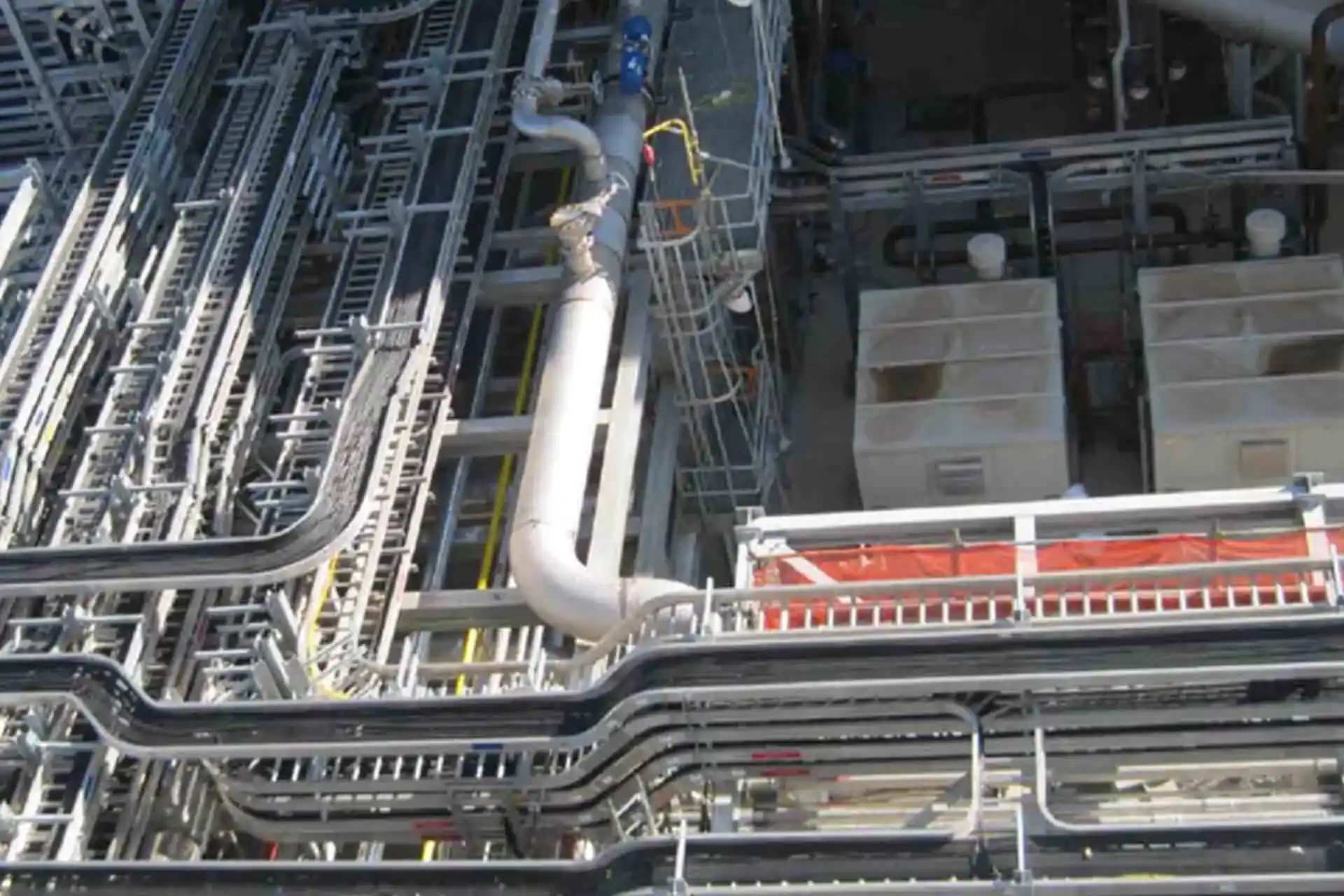
Cable Trays
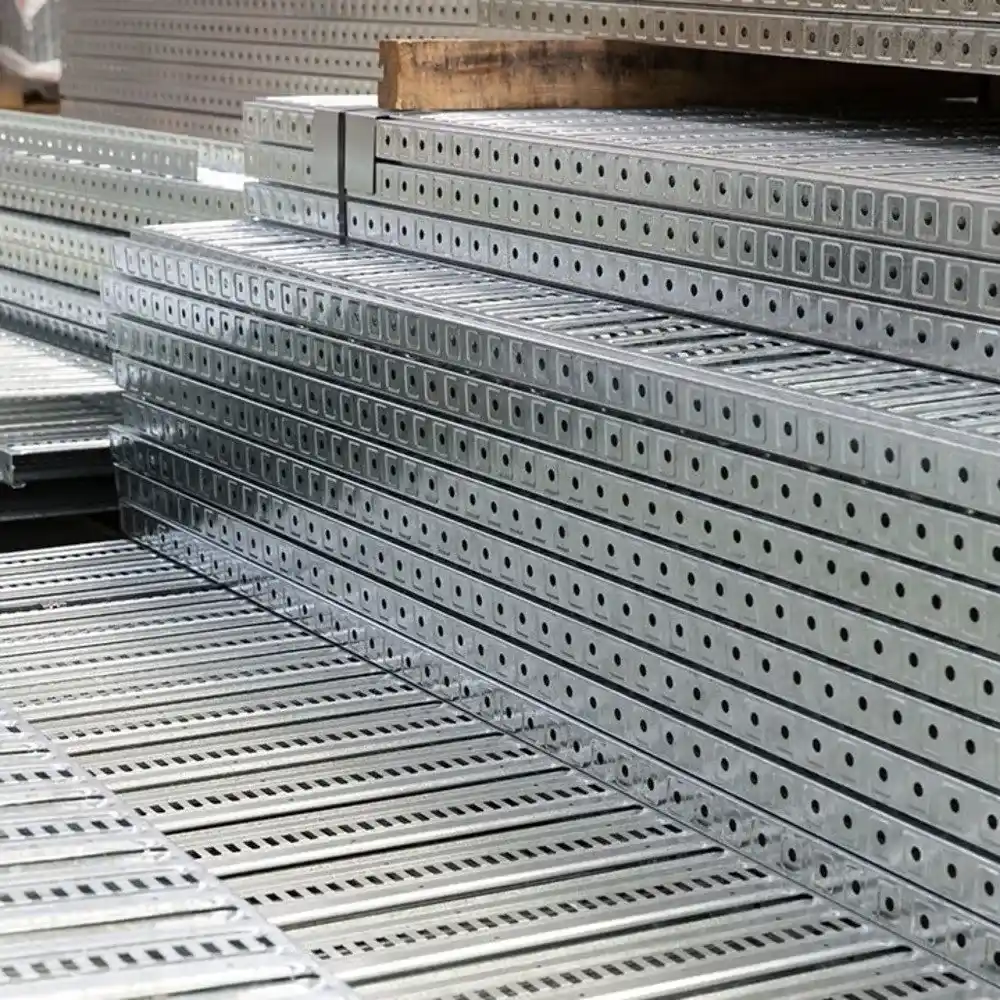
Perforated Cable Trays

Ladder Type Cable Tray

Crash Barriers
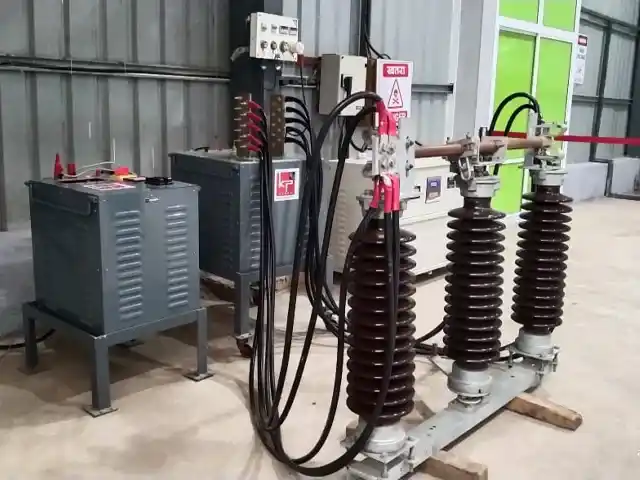
Electrical Isolator

Double Break Isolator/Disconnector
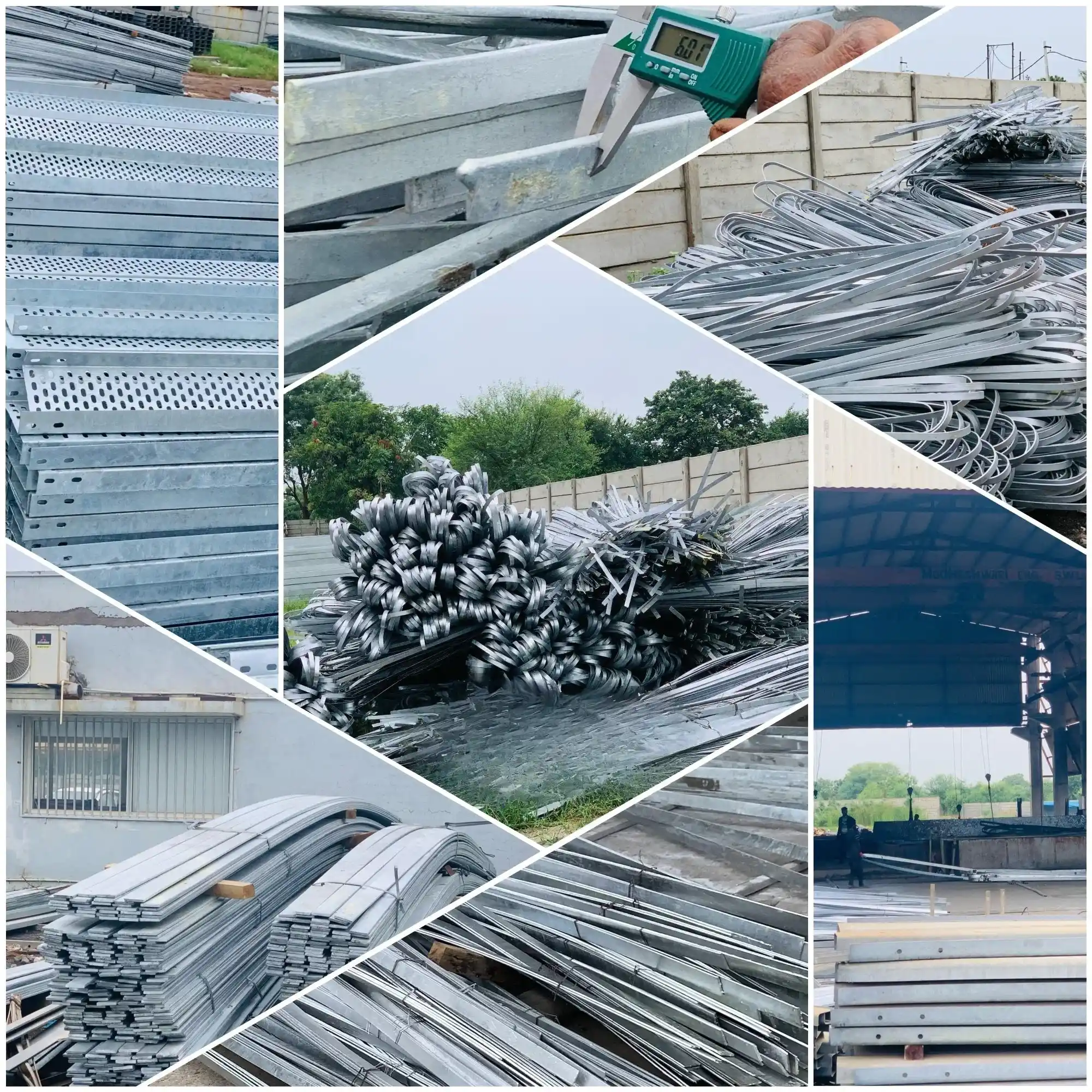
Galvanized Earthing Strips and Flats

Solar Rooftop Solutions
Latest News
Rs 272 Crore Orders! This Green Energy Engineering Stock Wins Contracts Across 3 Key Businesses
KP Group Raises FY32 Ambitions with KP 3.0, Targets 10 GW Each in Owned Generation and EPC
KP Group’s listed renewable businesses post strong multi year growth on the back of disciplined capital allocation, operational efficiency
Recently Uploaded Blogs


