
W-Beam vs Thrie-Beam Crash Barriers: Selecting the Right Solution for High-Impact Corridors
High-impact roads like highways, express roads, flyovers, and medians drive under severe conditions of speed and weight. Under such conditions, crash barriers are core infrastructure systems whose failure or success determines whether a collision will result in higher-order damage. An improper choice can result in vehicle override crashes, cross-median crashes, and uncontrolled deceleration forces. Proper selection can effectively absorb shocks, redirect approaches to safety, and save lives.
It’s here that the difference between W-Beam vs Thrie-beam crash barriers becomes a critical point of consideration. Out of all the crash barriers used along roads, W-Beam Crash Barrier and Thrie-Beam Crash Barrier are the two most common ones being specified in a typical modern road network. Both barriers have a different set of applications regarding safety aspects. While one has enhanced flexibility, the other has maximised strength.
This blog examines the pros and cons of both.
Understanding Highway Crash Barrier Types for High-Impact Corridors
Contemporary highways require engineered crash protection systems to react predictably during a crash. Highway crash barriers types exist to ensure that vehicles stay within the road, do not cross the median, or hit hazards along the road. The secret to their success depends on their ability to handle the energy created during the crash.
Of the many road safety crash barriers that are common when it comes to ensuring road safety, the most prevalent is one that maintains good strength, flexibility, and viability– metal beam guardrails. Guardrail system for highways help mainly along:
- Central medians
- Sharp curves and ramps
- Elevated sections and embankments
- Accident-prone road sections
The decision made on the type of barrier is usually based on the speed limit, road user mix, available deflection space, and severity of impact.
Role of Metal Beam Crash Barriers in Road Safety
A metal beam crash barrier undergoes deformation during a collision, where energy from a vehicle is transformed to move a structure in a controlled manner.

In a high-speed situation, such characteristics are critical. A well-engineered crash barrier for high-impact situations will prevent crossing while allowing for a stable redirection of the vehicles. W-beam barriers as well as Thrie-beam barriers are actually preferred in metal beam crash barriers due to their verified performance.
W-Beam Crash Barrier Design and Performance Characteristics
The W-beam crash barrier is the most commonly used roadside safety system on national highways as well as expressways. The characteristic wavy structure enables the barrier to give in when impacted.
Being a flexible crash barrier system, the impact energy is absorbed for a greater length in the W-beam barrier. The controlled deflection:
- Mitigates peak braking forces
- Minimises vehicle damage
- Reduces risk of injury to the building's occupants
W-beam barriers perform well when there is enough space available for lateral deflection of barriers.
W-Beam Crash Barrier Installation and Impact Absorption
W-beam crash barrier installation remains essential for the functionality of the barrier system. It comprises steel mounted on uprights that are dug into the soil.
Being a flexible crash barrier system, it is dependent on the following factors:
- Spacing and embedding
- The spacing
- Soil and foundation conditions
- Beam thickness and continuity
- Adequate terminal procedures
When properly mounted, W-beam barriers are able to redirect traffic smoothly back to the road, which makes them ideal for use in road edges, medians, as well as curves on highways.
Thrie-Beam Crash Barrier Design for Enhanced Impact Resistance
The Thrie-beam crash barrier is designed in a manner suitable for impacts of higher nature. A triple corrugated design enables a greater depth of structure than in a W-beam design.
This design improves:
- Impact load distribution
- Resistance to vehicle override
- Containment of heavy vehicles
As a high-impact crash barrier, the main criteria for selecting Thrie beams is where impact would be drastic.
Structural Strength Advantages of Thrie-Beam Systems
A Thrie-beam crash barrier is a reinforced metal beam crash barrier that disperses impact forces over a larger area. This produces higher containment with less deflection.
These systems are also quite normally installed in:
- High-speed highways
- Bridge approaches and parapets
- Steep embankments
- Truck-heavy corridors
Thrie-beam barriers, owing to structural strength, are most effective at locations where limited widths are available or where the mass of the vehicle significantly raises the severity of impacts.

W-Beam vs Thrie-Beam Difference in Highway Applications
The W-beam versus Thrie-beam difference has been a key aspect when it comes to crash barriers selection for highways. The two are actually metal beam barriers.
W-beam barriers focus on flexibility and energy absorption and are therefore used in highways with controlled risk of impact. Thrie-beam barriers focus on strength and containment and are therefore used where there is severe impact.
A poor design may either provide suboptimal coverage to important regions of a computer or might require additional expenditures without any proportional improvement in safety.
| Parameter | W-beam crash barrier | Thrie-beam crash barrier |
|---|---|---|
| Barrier profile | Double-corrugated beam | Triple-corrugated beam |
| Impact behaviour | Flexible deformation | Higher stiffness with controlled deformation |
| Energy absorption | Gradual energy dissipation over longer deflection | Higher energy resistance with lower deflection |
| Containment level | Moderate | High |
| Suitable impact severity | Low to moderate | Moderate to severe |
| Vehicle types | Passenger cars, light commercial vehicles | Heavy commercial vehicles, buses, trucks |
| Deflection requirement | Requires more lateral space | Requires less lateral space |
| Structural strength | Standard strength | Enhanced structural strength |
| Typical highway applications | Medians, road edges, curves | Bridges, flyovers, expressways, high-risk zones |
| Cost implication | More economical | Higher cost due to added material |
| Maintenance after impact | Easier replacement of damaged sections | Fewer failures but higher repair effort |
| Selection criteria | Used where flexibility and redirection are needed | Used where containment and strength are critical |
Performance Comparison Based on Impact Severity and Vehicle Type
The severity of impact will vary greatly depending on the weight and speed of the vehicle. A car hitting a barrier at freeway speed is a completely different impact compared to a loaded truck. For this reason, high impact crash barrier standards will not be applicable to all road sections.
A guardrail system for highways can benefit from deceleration peak-reducing systems. W-beam barriers can be considered effective for such purposes as they permit controlled dissipation of energy. But with increased usage of heavier vehicles, there are chances of barrier override.
In such situations, Thrie-beam barriers offer better containment capability to ensure that the vehicle stays within the road boundaries despite heavy impact. This performance-oriented approach has a very prominent place in designing crash barriers for highways.
Median Crash Barriers for High-Speed Highway Corridors
High-speed roads require the highest degree of safety from medians. This narrow land mass is used to separate the two moving streams of vehicles at world closing speeds, which do not have time for even the slightest corrections. Crossing such roads at speed means disaster. This explains why the design of a median crash barrier for highways takes one of the most prominent roles in contemporary road engineering.
While edge barriers function with one-way impact situations, the task of road safety crash barriers for the median region includes two-way impact situations. There are two aspects here. First, the barriers have to protect against cross-median crashes. They also have to absorb the impact and redirect the car without turning it over into the traffic.
Median barriers are most essential on controlled-access highways, expressways, and roads with heavy traffic flow. In these cases, a single crash can cause a multi-vehicle collision. The impact of the barriers plays a critical role in determining whether an incident becomes an isolated event or a severe collision.
Selecting W-Beam or Thrie-Beam for Highway Medians
Picking the correct system for a median is one of the most critical considerations in the crash barrier selection for highways. Essentially, it comes down to understanding the W Beam vs. Thrie Beam difference and using it effectively.
W-beam barriers are generally chosen when median widths enable controlled deflection. The capacity to deflect and absorb energy is crucial in reducing injuries and instability to the vehicle. The advantage of deflection is significant when the widths are larger since it will not encroach into the other road.
Thrie-beam systems on the other hand, are used when there are small median widths or when traffic composition consists of a large percentage of heavy vehicles. In this scenario, the increased structural strength resists deflection to prevent the barrier from being overrun or breached. Containment becomes the predominant goal over flexibility.
NHAI Crash Barrier Standards and Compliance Requirements
Highway safety infrastructures in India come under strict regulatory frameworks to ensure uniformity and performance. NHAI crash barrier standards define a minimum requirement on design, testing, installation, and maintenance of barriers all along the national highways.
These give standards for containment levels, deflection limits, installation geometry, and anchorage systems. When these standards are implemented, any guardrail system for highways will perform in an expected manner under impact conditions in both traffic conditions (mixed vehicle types and high axle loadings) in India.
The NHAI standards also lay emphasis on appropriate placement at medians, bridges, curves, and accident-prone zones. A barrier that meets the requirements of material specifications but is installed poorly is not in compliance. This preoccupation with performance-based compliance indicates a consciousness growing to the realization that, just as safety outcomes depend upon designing, so it would on execution.
Material and Performance Criteria Under Indian Highway Standards
One of the essential factors of the NHAI crash barrier specification is the durability of materials. Roads are exposed to heat, monsoons, environmental pollution, and vibrations. In order to withstand all this, the construction of the barriers should be made of galvanized steel crash barriers.
As per Indian standards, a metal beam crash barrier must have a certain thickness, coat, and strength. Galvanization prevents corrosion of steel and helps maintain strength for years.
Performance criteria would additionally entail absorption capacity of energy, distance between posts, continuity of beam elements, as well as proper terminal detailing. All these elements would help ensure that the barrier functions predictably.
Galvanized Steel Crash Barriers for Long-Term Durability
Highway guardrail systems should work dependably for years, often requiring little or no maintenance. That's why galvanized steel crash barriers are the material of choice for the protection of long-term infrastructure.
Galvanizing provides a protective zinc coating to the steel against moisture, chemicals, and atmospheric corrosion. This protection is particularly critical for highway environments, where barriers are under constant attack from rainwater runoff, exhaust pollutants, and road salts. If not prevented or controlled, corrosion can weaken connections, diminish energy absorption capacity, and compromise safety.
They offer consistent performance over time, even in aggressive environmental conditions, as part of road safety crash barriers. Their durability reduces life-cycle costs and thus is considered both a safety and economic choice.
Corrosion Protection and Lifecycle Performance on Highways
The actual benefit for galvanized steel crash barriers is in their life cycle characteristics. One barrier may fulfill design requirements on day one. It may behave in a certain manner during the impact process. After the development of rust on the barrier, it becomes unpredictable on impact.
Galvanised coatings provide a delay to the onset and rate of the process of corrosion, thus ensuring the structural integrity of the barrier even after the expiration of the intended lifespan through this process. This is important when the system is to be used as a flexible crash barrier system.
With time, the above factors result in the minimized replacement of the structure, reduced intervention in the maintenance of the structure.

Selecting the Right Crash Barrier for High-Impact Corridors
Crash barrier selection for highways involves an understanding of how barriers interact with vehicles in real crashes. This is most true when specifying a high-impact crash barrier.
High-impact corridors may include expressways, elevated sections, freight routes and accident-prone zones. Vehicle speeds are high, masses large and consequences of failure severe. Containment, stability, and predictable behavior under extreme loads must be emphasized when selecting barriers.
Selection of effective crash barrier for highways takes into account: Traffic speed and density, vehicle makeup, available deflection space, consequence of the barrier breach, environmental exposure.
It has to operate consistently over all these variables: a high-impact crash barrier. But when correctly selected, it is an invisible safety net shaping outcomes.

Frequently Asked Questions:

About Us
KP Green Engineering Ltd. provides complete engineering and steel structure manufacturing solutions worldwide, serving industries such as renewable energy, telecommunications and beyond.
Get In Touch

Transmission Line Towers

Windmill Lattice Towers

Telecom Towers
Substation & Switchyard Structures

High Mast Towers

Mono Pole Towers
Solar Module Mounting Structures

Solar Trackers

Pre-Engineered Building
Cable Trays
Perforated Cable Trays

Ladder Type Cable Tray

Crash Barriers
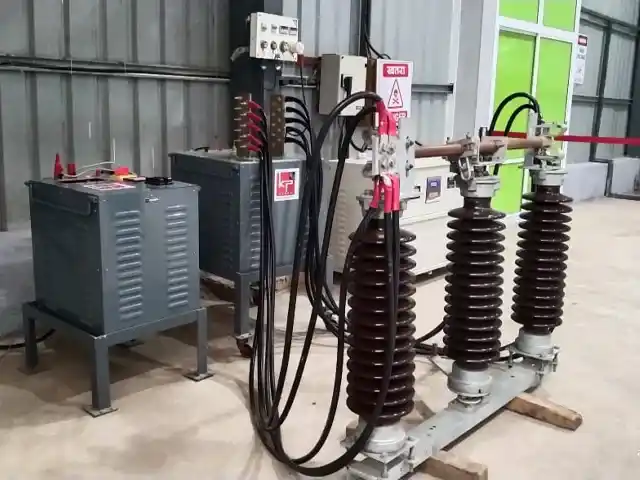
Electrical Isolator

Double Break Isolator/Disconnector
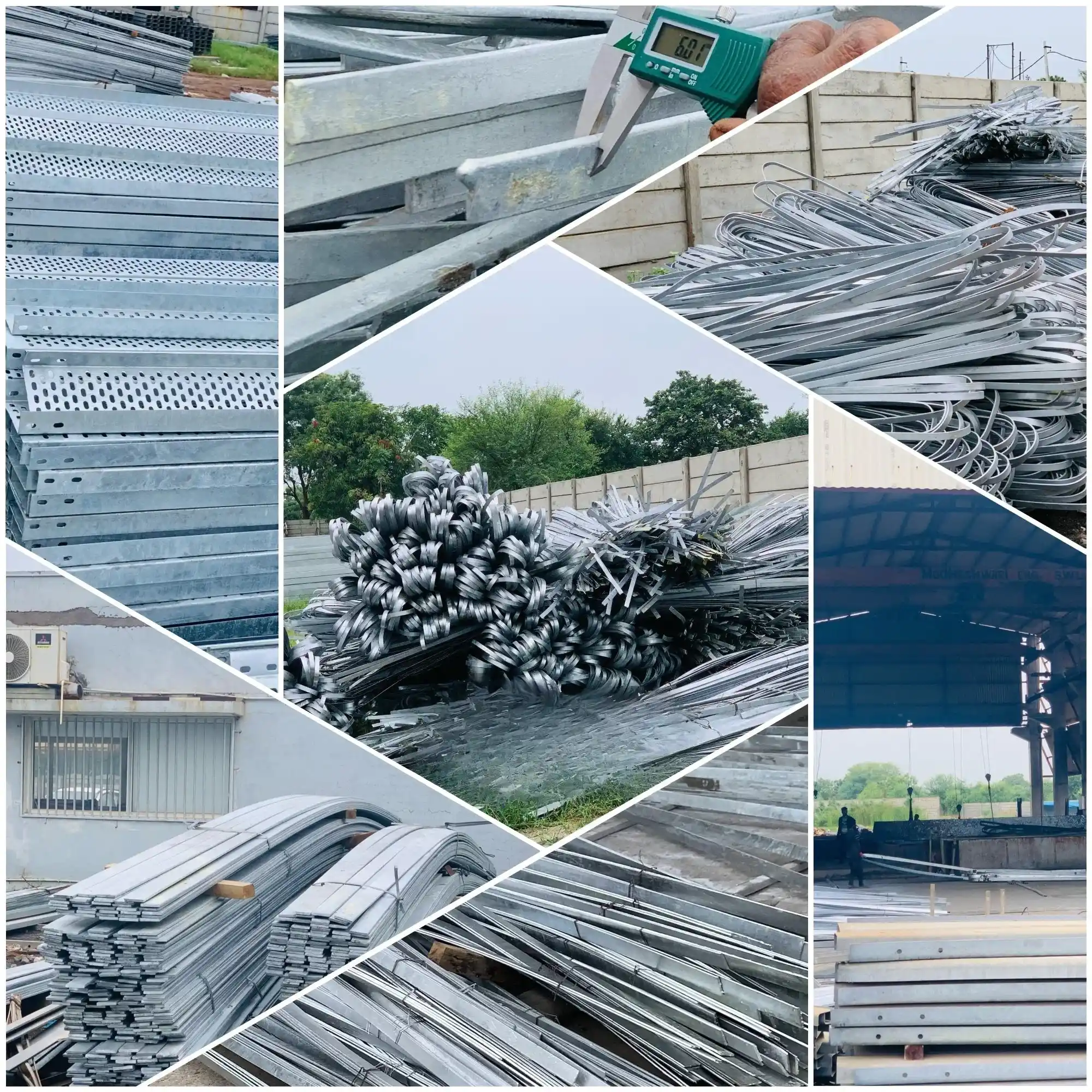
Galvanized Earthing Strips and Flats

Solar Rooftop Solutions
Latest News
Rs 272 Crore Orders! This Green Energy Engineering Stock Wins Contracts Across 3 Key Businesses
KP Group Raises FY32 Ambitions with KP 3.0, Targets 10 GW Each in Owned Generation and EPC
KP Group’s listed renewable businesses post strong multi year growth on the back of disciplined capital allocation, operational efficiency
Recently Uploaded Blogs


