
Single Axis vs Dual Axis Solar Trackers: ROI and Energy Gain Differences
Most solar buyers assume more movement means more money.
A tracker that follows the sun on two axes instead of one should, in theory, win every comparison. The single axis vs dual axis solar tracker decision actually comes down to a much simpler question: how much extra energy are you really getting for the extra cost, and does that energy arrive fast enough to matter for your project's return.
This blog breaks down exactly that, energy gain, cost, maintenance, and payback, so the comparison is based on what each system delivers, not what sounds more advanced.
What Single Axis and Dual Axis Trackers Actually Do
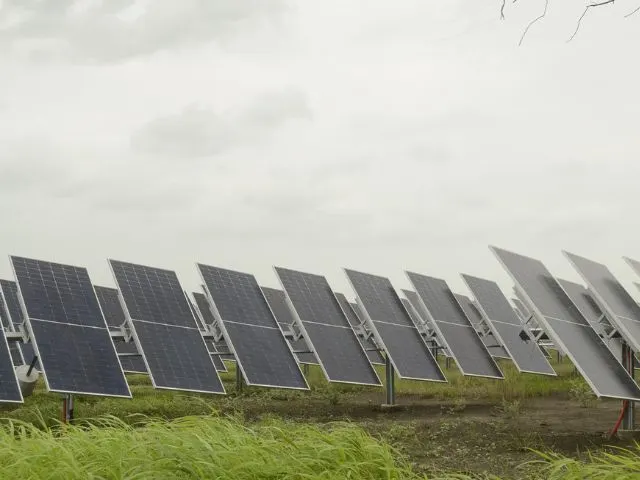
A single axis solar tracker moves panels along one axis, almost always east to west, following the sun's daily arc. One motor, one direction, a straightforward mechanism that's been refined for over a decade in utility and industrial solar.
A dual axis solar tracker adds a second movement. Alongside the east-west motion, it adjusts tilt to track the sun's seasonal height changes too. Two motors, two axes, panels staying closer to perpendicular against the sun almost all day, every day of the year.
Second axis sounds like the obvious upgrade, but more precision doesn't automatically translate into more value.
| Feature | Single Axis Tracker | Dual Axis Tracker |
|---|---|---|
| Axes of movement | One (east-west) | Two (east-west + tilt) |
| Motors required | One | Two |
| Mechanical complexity | Low | High |
| Typical use case | Utility scale, large C&I ground mount | Smaller, space constrained or premium output sites |
How Much More Energy Does Each One Actually Generate
Here's where the gap between expectation and reality shows up clearly. Single axis solar tracker ROI assessment usually starts with an energy gain of roughly 15 to 20% over a fixed tilt system. It's the reason single axis has become the default at utility and large commercial scale across India.
A dual axis solar tracker ROI assessment, by contrast, typically shows higher gain over fixed tilt. But usually adds only 10 to 15% more energy than a single axis already delivers.
Most of the available solar tracker energy gain is already captured by the simpler system. The second axis is chasing a smaller and smaller slice of additional sunlight, and that slice gets harder to monetize once you account for what it costs to capture.
What Each System Costs to Install and Maintain

Single axis trackers typically add 15 to 20% to project cost over fixed tilt, a manageable premium given the energy return. Dual axis systems run considerably higher, often 20 to 30% above fixed tilt, before accounting for what happens after installation.
More moving parts means more things that can fail. Single axis systems use one motor and a simpler drive mechanism, so there's less to inspect, lubricate, and replace over a 25 year project life. Dual axis systems, with two independent motors and more complex joints, demand a heavier maintenance routine and carry higher downtime risk, particularly in dusty or high wind sites common across Gujarat, Rajasthan, and other high irradiance Indian states.
For a business owner running the numbers, this isn't a minor footnote. Maintenance cost compounds every year a system operates.
Which One Actually Pays Back Faster

Single axis tracking generally reaches payback faster precisely because it's chasing a smaller cost premium against a meaningful energy gain. The math works in its favor: moderate extra investment, strong extra output, low ongoing risk.
Dual axis can still make financial sense, but only where conditions justify it: limited land where every additional percentage point of yield per panel actually matters, or sites with unusually strong and consistent irradiance where the extra energy capture is worth the extra spend.
Outside those conditions, the incremental energy dual axis adds rarely justifies its incremental cost and complexity at C&I or utility scale, which is exactly why single axis has become the standard choice across most of India's commercial solar deployments.
| Metric | Single Axis | Dual Axis |
|---|---|---|
| Energy gain over fixed tilt | - | 10 to 15% More than Single Axis |
| Cost premium over fixed tilt | 15-20% | 20-30% |
| Typical payback advantage | Faster, lower risk | Slower unless site conditions are ideal |
| Best fit | Utility scale, large C&I ground mount | Space constrained, premium yield niche sites |
Which Tracker Actually Fits Your Project

The right answer depends less on which tracker performs better in isolation and more on what your site actually needs. If you're working with open land at scale, the kind most C&I ground mount projects involve, single axis tracking gives you most of the available energy gain at a cost and maintenance burden that's far easier to plan around.
Dual axis earns its place only in specific situations: tight land footprints where output per panel matters more than output per rupee spent, or sites where the extra irradiance genuinely changes the economics.
For most businesses evaluating a solar tracking system for utility scale solar or large rooftop adjacent ground mount projects, the best solar tracker for solar power plant use is the one that matches your land, your budget, and how much ongoing maintenance your team can realistically handle, not the one with the most axes.
Choosing the right mounting and tracking structure also has a direct bearing on how a project actually performs once it's built. The way panels are anchored and spaced shapes everything from wind resistance to long term ground mounted structure durability, which is part of why structural design and tracker choice need to be evaluated together rather than separately.

Quick Takeaway
Single axis tracking delivers most of the energy gain available from tracking technology, at a cost premium and maintenance load that pays back reliably across nearly all C&I and utility scale projects in India.
Dual axis adds real but smaller extra output, justified mainly in space constrained or unusually high irradiance sites. For most businesses, the smarter financial decision is the simpler system.
Frequently Asked Questions:

About Us
KP Green Engineering Ltd. provides complete engineering and steel structure manufacturing solutions worldwide, serving industries such as renewable energy, telecommunications and beyond.
Get In Touch

Transmission Line Towers

Windmill Lattice Towers
Telecom Towers
Substation & Switchyard Structures

High Mast Towers
Mono Pole Towers
Solar Module Mounting Structures
Solar Trackers

Pre-Engineered Building
Cable Trays
Perforated Cable Trays

Ladder Type Cable Tray

Crash Barriers
Electrical Isolator

Double Break Isolator/Disconnector
Galvanized Earthing Strips and Flats

Solar Rooftop Solutions
Latest News
Rs 272 Crore Orders! This Green Energy Engineering Stock Wins Contracts Across 3 Key Businesses
KP Group Raises FY32 Ambitions with KP 3.0, Targets 10 GW Each in Owned Generation and EPC
KP Group’s listed renewable businesses post strong multi year growth on the back of disciplined capital allocation, operational efficiency
Recently Uploaded Blogs


