
Top Benefits of High Mast Lighting for Industrial and Stadium Use
The stadium is roaring. Floodlights wash the entire ground in a bright, almost daytime glow. Every movement on the field feels sharper, faster, more intense. A ball rockets toward the boundary at 140 kph, and somehow, it never disappears into the night.
So why don’t high mast lighting benefits for industrial and stadium use end up with harsh glare, uneven brightness, or dark patches that break the game’s flow?
Because what you’re seeing is not just lighting, it’s controlled visual engineering designed for precision under pressure.
Behind every electrifying match is the steel structure that makes it all possible - high mast towers that ensure uniform illumination, minimal glare, and uninterrupted visibility across every inch of the field.
This blog explores why high mast lighting, despite being widely used in airports, industrial sites, and large outdoor spaces, behaves very differently in cricket stadiums and how sports lighting systems are engineered for uniformity, glare control, and broadcast level visibility under strict global standards.
What Makes High Mast Lighting a Preferred Solution for Large Outdoor Areas?

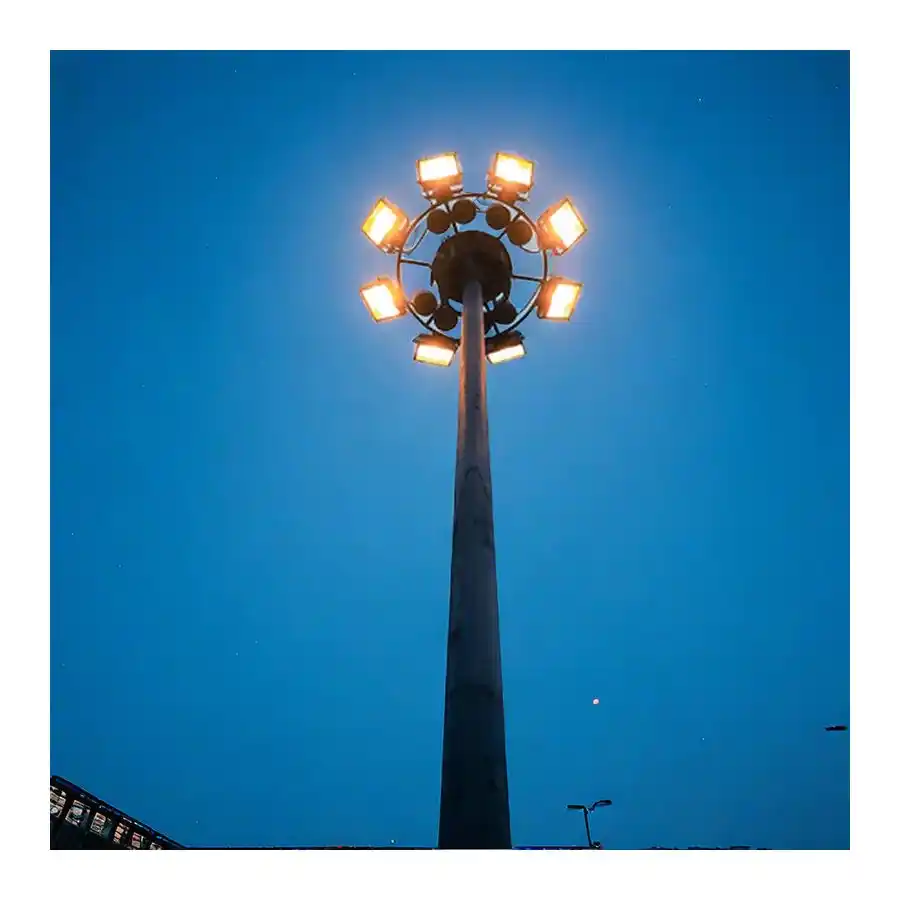
High mast lighting is about coverage efficiency. A single mast, typically between 10 and 60 metres, can illuminate what would otherwise need multiple smaller poles.
That shift changes how a site functions. Not just how it looks on paper.
Instead of scattered light pockets, you get broader, more continuous illumination. Fewer poles mean fewer obstructions. And fewer obstructions, especially in active environments.
Think about a logistics yard at night. Trucks reversing, forklifts moving, workers crossing lanes. The last thing needed is a forest of poles interrupting sightlines.
High mast systems here offer some of the most effective large area lighting solutions for industrial use.
Key advantages in large area applications:
- Wider illumination footprint from a single point
- Reduced the number of foundations and cable routes
- Cleaner movement corridors for vehicles and pedestrians
- More coherent lighting instead of fragmented pools
- Better perimeter visibility for security
Where Are High Mast Lighting Applications Most Useful in Industrial Environments?
Certain environments almost demand this kind of solution. Not because it’s modern, but because alternatives create friction.
Across India, high mast lighting applications in industries are most common in:
- Port terminals and container yards where operations run 24/7
- Railway yards with long track layouts and limited access points
- Logistics parks handling continuous vehicle flow
- Power plants and substations with large perimeter zones
- Mining and quarry sites exposed to harsh conditions
- Airport apron surroundings where obstruction free layouts are critical
Traditional pole layouts can technically light these areas. But they rarely do it cleanly. Industrial outdoor lighting solutions in India show why high mast systems outperform conventional arrangements in these contexts. Offering wider, more uniform illumination with fewer fixtures, as seen in solutions like high mast towers.
Why Is High Mast Lighting Effective for Stadiums and Public Venues?

High mast lighting for stadiums is highly effective for:
- Parking zones and approach roads
- Spectator movement areas and concourses
- Practice grounds and secondary fields
- Outer security and perimeter lighting
These are all essential parts of a stadium ecosystem. And they benefit from wide area lighting.
But, professional sports lighting depends on far more than height. It requires:
- Controlled horizontal and vertical illuminance
- Strict uniformity across zones
- Glare management for players and cameras
- Colour quality for broadcast
A high mast can physically hold the luminaires. But whether it meets these standards depends entirely on design, not the mast itself.
What Are the Main Advantages of High Mast Lighting Systems Over Conventional Pole Layouts?
The comparison becomes clearer when laid out side by side.
| Parameter | Conventional Poles | High Mast Systems |
|---|---|---|
| Number of poles | High | Low |
| Ground obstruction | Significant | Minimal |
| Cable distribution | Spread across site | Concentrated |
| Coverage pattern | Fragmented | Wide and unified |
| Suitability for large areas | Limited efficiency | Highly effective |
Fewer poles mean fewer decisions during operations. Less interference. Better flow.
That’s often the deciding factor in industrial outdoor lighting solutions in India and one of the main advantages of high mast lighting systems.
How Do LED High Mast Systems Improve Performance and Energy Efficiency?
The transition to LED changed everything.
Earlier systems relied on HID lamps. They consumed more power, took time to start, and required frequent replacement. LED high mast lighting benefits go far beyond just energy savings.
| Parameter | Traditional Metal Halide | Modern LED |
|---|---|---|
| CRI | 65–80 | 90+ |
| TLCI | Often < 80 | 90+ |
| Flicker at 50Hz | Significant | Near zero |
| Warm up time | 15–20 minutes | Instant |
| Dimming | Limited | Full DMX control |
| Maintenance frequency | High | Reduced |
Modern guidance, including sports lighting standards, is now fully aligned with LED systems because of their stability and control.
For operators, the advantage is practical. Lower bills. Fewer interventions. Better light quality. Energy efficient high mast lighting systems deliver measurable cost savings with high mast lighting.
How Can High Mast Lighting Improve Safety, Visibility, and Site Operations?
Lighting influences behaviour more than expected.
Inconsistent lighting creates hesitation. Drivers slow unpredictably. Workers misjudge distances. Shadows hide edges and obstacles.
High mast systems reduce that uncertainty by creating a more even visual field.
Operational improvements typically include:
- Better visibility for drivers across large yards
- Reduced shadow zones near loading areas
- Improved hazard detection
- Clearer pedestrian movement paths
- Enhanced security coverage
This is where lighting stops being a utility and starts becoming part of industrial outdoor lighting solutions in India and high mast lighting applications in industries.
What Cost Savings Can High Mast Lighting Deliver Over Time?
The upfront cost is higher. That’s usually the first concern raised.
But cost savings with high mast lighting are not about installation. They show up over time.
- Fewer poles reduce civil and cabling costs at scale
- LED systems cut electricity consumption significantly
- Lower maintenance frequency reduces labour and downtime
- Planned servicing through lowering systems avoids disruptions
LED high mast lighting benefits and energy efficient high mast lighting systems make lifecycle thinking a reality.
Why Is Maintenance Planning So Important in High Mast Lighting Projects?
A luminaire mounted 30 metres above ground cannot be accessed casually. That’s where high mast lighting installation and maintenance comes in.
Modern systems typically include:
- Motorised winch systems
- Steel wire rope assemblies
- Pulley mechanisms
- Ground level servicing access
Government procurement platforms like GeM already push for these features because they make maintenance realistic. Without them, systems degrade faster than expected.
How Does High Mast Lighting Compare with Stadium Floodlighting?
Stadium floodlighting vs high mast lighting sometimes overlap physically. But functionally, they can be very different.
High mast lighting is suitable for:
- General area illumination
- Circulation and infrastructure zones
- Non broadcast applications
Stadium floodlighting, especially for professional matches, is governed by strict standards.
It focuses on:
- Illuminance levels across playing zones
- Uniformity ratios
- Glare control
- Camera visibility requirements
A tall mast alone does not meet these requirements. It must be part of a complete lighting design strategy.
What Design Standards and Engineering Factors Matter in High Mast Projects?
Lighting is only one part of the system. The structure itself carries equal importance.
In India, high mast lighting design standards India involve:
- Wind loading calculations based on IS 875
- Structural integrity of the mast and foundation
- Galvanization for corrosion resistance
- Electrical safety under IS and IEC codes
- Earthing and surge protection
Government specifications, especially through GeM, require compliance across these areas. High mast poles for infrastructure projects must meet these standards to ensure long term performance.
How Do Pole Height, Fixture Selection, and Optics Affect Performance?
There’s a misconception that taller always means better. Performance depends on how light is distributed, not just where it is mounted.
Critical factors include:
- Beam angles and optical distribution
- Spacing between masts
- Aiming angles to reduce glare
- Uniformity across the coverage area
A poorly designed high mast system can create bright spots and dark zones simultaneously. Height alone cannot fix that. Advantages of high mast lighting systems are realized only with proper optics, spacing, and design for large area lighting solutions industrial use.
What Role Does Corrosion Protection and Material Quality Play in Long Term Reliability?
In coastal regions or industrial zones, corrosion becomes a real threat. That’s why material quality matters as much as lighting output.
Important considerations:
- Hot-dip galvanization for steel structures
- Protective coatings for harsh environments
- Weather resistance of fixtures and cabling
- Long term durability under wind and exposure
For infrastructure projects, reliability is measured over decades, not years. High mast lighting installation and maintenance and quality high mast poles for infrastructure projects are critical for long term service life.
When Is High Mast Lighting the Wrong Choice or Not Enough on Its Own?
High mast lighting is powerful, but not universal. It struggles in:
- Complex sites with multiple obstructions
- Areas requiring precise shadow control
- Broadcast grade sports environments without proper design
- Urban settings with strict glare and spill constraints
Hybrid or alternative solutions may perform better. Recognising these limits ensures realistic expectations for stadium floodlighting vs high mast lighting and industrial outdoor lighting solutions in India.
How Should Industrial and Stadium Projects Evaluate a High Mast Lighting Upgrade?
A proper evaluation avoids expensive mistakes.
Structured assessment includes:
- Site audit of current lighting performance
- Application classification based on usage
- Lighting simulation before installation
- Structural assessment of wind and soil conditions
- Maintenance planning integrated into design
- Lifecycle cost comparison
- Standards compliance verification
These steps ensure high mast lighting benefits for industrial and stadium use are realized, with cost savings with high mast lighting and compliance to high mast lighting design standards India.

Final Takeaway: Top Benefits of High Mast Lighting for Industrial and Stadium Use?
When used in the right context, high mast lighting benefits for industrial and stadium use deliver real, measurable value.
Wide area coverage. Fewer obstructions. Lower energy use with LED high mast lighting benefits. Easier maintenance when designed properly with energy efficient high mast lighting systems.
These benefits are practical and measurable.
High mast lighting is not just about height. It’s about design intent.
For industrial and infrastructure environments, it remains one of the most effective large area lighting solutions for industrial use. For stadium play, it complements a specialised system designed to meet stricter performance standards.
Understanding this distinction separates a good installation from one that actually works.
Frequently Asked Questions:

About Us
KP Green Engineering Ltd. provides complete engineering and steel structure manufacturing solutions worldwide, serving industries such as renewable energy, telecommunications and beyond.
Get In Touch

Transmission Line Towers

Windmill Lattice Towers
Telecom Towers
Substation & Switchyard Structures
High Mast Towers
Mono Pole Towers
Solar Module Mounting Structures
Solar Trackers

Pre-Engineered Building
Cable Trays
Perforated Cable Trays

Ladder Type Cable Tray

Crash Barriers
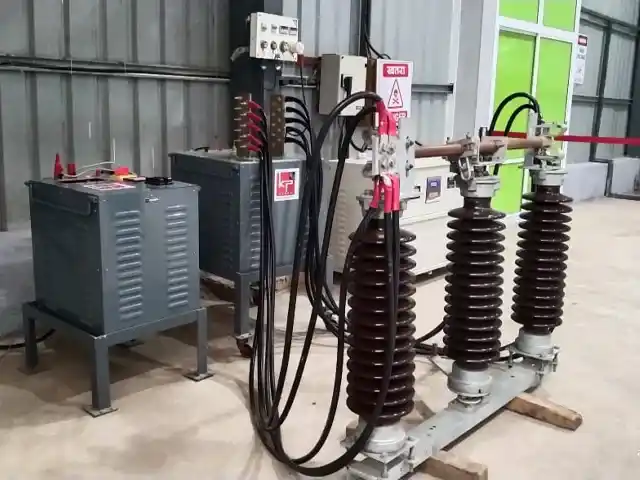
Electrical Isolator

Double Break Isolator/Disconnector
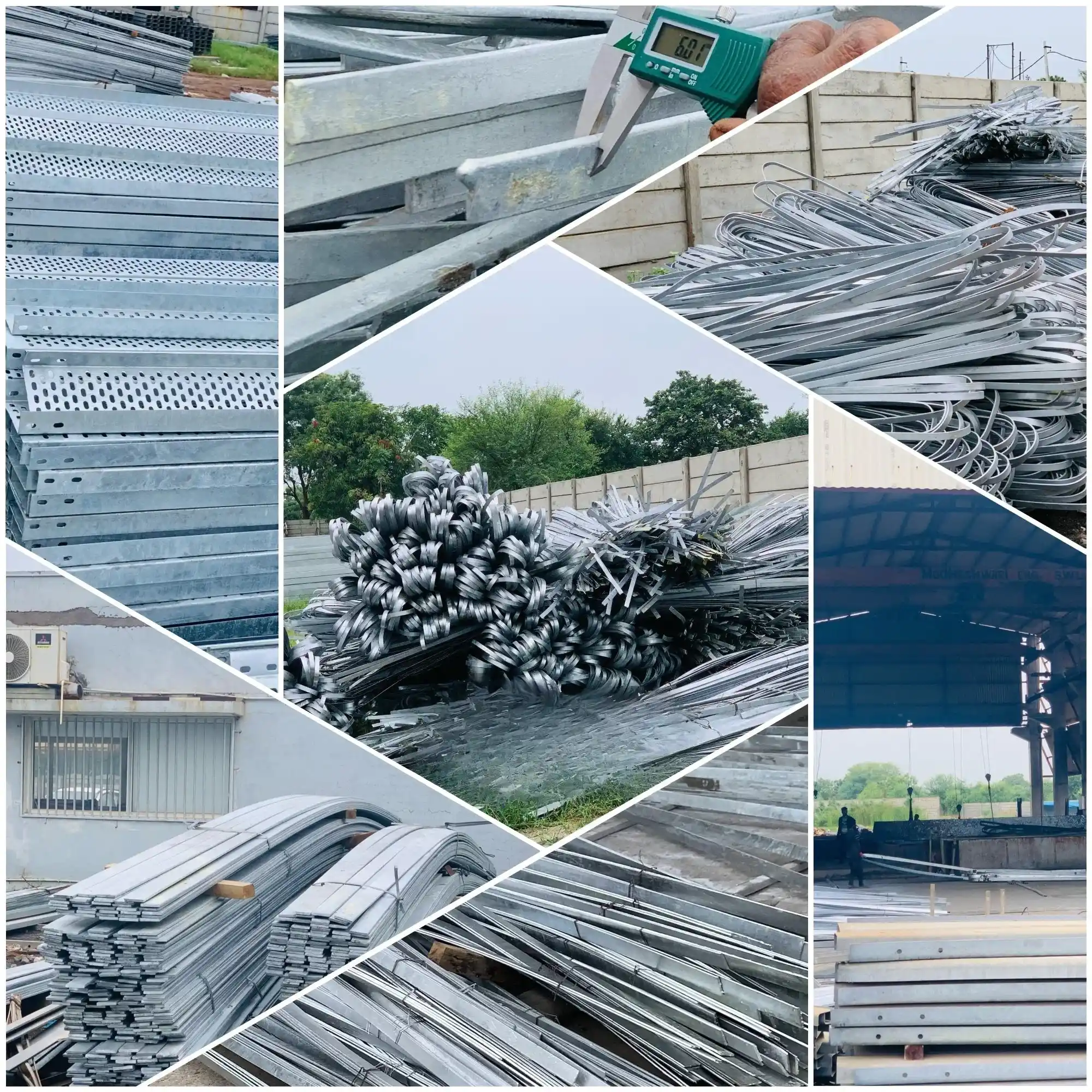
Galvanized Earthing Strips and Flats

Solar Rooftop Solutions
Latest News
Rs 272 Crore Orders! This Green Energy Engineering Stock Wins Contracts Across 3 Key Businesses
KP Group Raises FY32 Ambitions with KP 3.0, Targets 10 GW Each in Owned Generation and EPC
KP Group’s listed renewable businesses post strong multi year growth on the back of disciplined capital allocation, operational efficiency
Recently Uploaded Blogs


