
Crash Barriers for Rail and Airport Infrastructure: Engineered for Maximum Safety and Impact Protection
With the scale of moving millions of people, the margin for error has to be extremely small, such as high-speed trains entering crowded stations or aircraft taxiing, landing, and braking on runways. At this point, crash barriers for rail and airport Infrastructure are playing a quiet but indispensable role.
Crash barriers are far from being only passive safety add-ons; these are carefully planned impact protection systems that are intended to absorb energy, change the vehicle's direction, and stop the occurrence of disastrous results in the areas that are at the highest risk. For example, railway crash barriers on the rail networks serve the purposes of protecting platforms, tracks, and the public spaces that are next to the railway from derailments and overspeed incidents. Meanwhile, airport safety barriers help runways, taxiways, terminals, and ground operations to be free from the overruns of aircraft and collisions with vehicles.
With the increase of train traffic on rail corridors and the airports becoming busier with more flights, the question of the necessity of impact protection for rail infrastructure and aviation safety systems remains. Proper barrier choosing, positioning, and fitting play a great part in the prevention of accidents, the alleviation of damage to the already existing structures and preventing loss of life.
Understanding the Importance of Crash Barriers in Rail and Airport Safety
When operational controls or human judgment fail, railway crash barriers and airport safety barriers are the last line of defence.
The railway risks are overshooting of platforms by trains, derailment of rolling stocks, collisions with maintenance vehicles, and accidental intrusions into the tracks. Crash barriers assist in the containment of impact forces, stopping vehicles from entering passenger zones, and safeguarding the signalling or electrical systems.
At airports, however, the stakes are much higher. Aircraft are heavy carriers of kinetic energy, particularly during landing or aborted take-offs. Airport safety barriers are there to absorb or redirect the impact before it escalates into fire, structural failure, or mass casualties. For this reason, they have been installed strategically next to runways, aprons, fuel zones, and terminal perimeters.
Crash barriers are present in both sectors in which they perform the following functions: they reduce the severity of the accident, protect passengers, staff, and assets that are critical to operations, prevent secondary damage to electrical and signalling systems, and support regulatory safety compliance.

Types of Crash Barriers for Rail Infrastructure
Due to the factors of speed, load, vibration, and operational frequency, rail networks need specialised railway safety systems that can closely monitor these factors. Different rails require different types of rail impact protection systems.
- Rigid Barriers: Such barriers are forcibly either concrete or steel walls, thus usually of reinforced concrete and steel. They are installed at platform ends, depots, and terminal tracks, the main purpose of the installation is to be buffer zones by being to stop or slow down significantly.
- Semi-Rigid Steel Barriers: They are along elevated tracks or near pedestrian crossings, and these barriers become destroyed by the incoming forces to the point where the original structure disappears entirely together with the energy absorbed from the cataclysm thus preventing the train from colliding and maintenance vehicles from passing through the deadlock. Furthermore, the barriers come into full or partial contact with the stairs' handrails, which absorb the energy and, at the same time, prevent the people against which the stairs are amicably positioned from danger and thus provide complete accident protection.
- Energy-Absorbing Buffer Stops: These advanced rail impact protection systems that are placed at the railway stations and yards of the dead-end tracks employ hydraulic or friction-based mechanisms to release kinetic energy safely during overshoots.
- Trackside Safety Barriers: They are used in urban rail corridors and are the railway safety systems that, for example, avert that the derailed vehicles can cause harm to areas such as roads, buildings, and public spaces which are near the railway and particularly in metro and suburban networks most importantly. Rail derailments might sometimes be a hazard to the locality, and sometimes the consequences might be severe.
Each kind is determined by the speed limits, the carrying weight of the stock and the surrounding area's risk of exposure.

How Runway Crash Barriers Enhance Airport Safety
Airports are intricately designed, high-tension situations, where a single mistake of the smallest magnitude can lead to disastrous results. Runway crash barriers are devices that are built to absorb aircraft-level forces and ensure safety in high-impact zones.
- Aircraft Overrun Protection: In cases of aborted take-offs or wet-runway landings, aircraft may go beyond the distance required for stopping. Runway crash barriers and arresting systems serve as the means to the reduction of the impact forces and the resumption of the controlled motion of the vehicle.
- Perimeter and Apron Safety: Ground support vehicles, fuel trucks, and service equipment are the closest neighbors of aircraft, working in tight spaces. Thus, the presence of runway crash barriers in a strategic manner will not only prevent the collisions from escalating into runway incursions, but also give a sense of safety to the personnel and crew.
- High-Risk Zone Isolation: The areas around fuel farms, navigation equipment, and terminal façades, are among those that depend on safety barriers for high-impact zones, in order to protect the most vulnerable parts from the unintended strikes.
These mechanisms are the main contributors to the aviation safety system, as they are capable of functioning under heavy loads, extreme temperatures, and are exposed to all kinds of weather.

Crash Barrier Installation for Airports: Best Practices
Crash barrier installation for airports is as important as the design. A properly installed airport crash barrier will ensure that the systems will work exactly as they were programmed in the case of a real-world impact.
- Site-specific risk assessment: Each airport operates differently. Installation planning has to take into consideration the type of aircraft, speed, angles of the approach, and any infrastructure that is nearby.
- Compliance with aviation standards barriers: Have to be in line with the standards of ICAO, FAA, and the local aviation authority. The safety of the situation may be compromised if the installation is done incorrectly even if the systems are certified.
- Foundation and anchorage precision crash barriers: Built on strong foundations. Inefficient anchoring decreases the energy absorption capability and as a result, the barrier may be broken during the moment of a collision.
- Minimal operational disruption: The effective installation of a crash barrier in an airport is done in stages so that there are no runway closures thus safety upgrades do not interfere with airport operations.
- Regular inspection and maintenance inspections: After the installations are carried out to ensure that the barriers are still strong structurally even though they have been subjected to constant vibration, weather, and ground activity.
Key Features of Effective Barrier Systems for Rail Stations
Rail stations mix the heavy traffic of passengers with the continuous movement of trains, which makes them very susceptible to accidents. Properly designed barrier systems for rail stations need to keep safety, durability, and the passenger experience in balance.
- High Energy Absorption: An effective system changes its shape in a controlled manner when hit, thus lessening the energy that is transferred to the neighbouring parts of the building.
- Compact and Space-Efficient Design: Stations are usually situated in areas with limited space. Barrier systems for rail stations have to be a source of safety for people without being an obstacle for their movement or making it difficult to see.
- Corrosion and Fatigue Resistance: Materials are subject to constant vibration, moisture, and some kind of electrical interference and therefore are supposed to be able to resist wear over a long period if they are to be made from those materials.
- Modular Construction: Modular systems enable an action of replacement fast after they were hit, consequently, the time during which the system cannot be used as well as the costs for it that arise from the store of spare parts will both be reduced.
- Seamless Integration with Station Design: Contemporary barriers are built around the architectural features of a building that are kept for their visual appearance and at the same time, they are giving out the least possible compromised safety.
When these arrangements are rigorously thought through, they serve as a buffer not only for structures but also for the public's confidence in transport sector.
The Role of Airport Perimeter Safety Barriers in Securing Aviation Areas
Airports are infrastructural assets that demand security protection programs on multiple layers. Although runways and terminals are mostly talked about, it is an airport perimeter that is the most vulnerable to security breaches. That is where airport perimeter safety barriers become indispensable.
Almost all airports have a large perimeter that in most cases goes along the public roads, industrial zones, or open areas. Those edges without strong safety barriers turn into the places from where unauthorized vehicles, trespassers, or even accidental intrusions may enter. Airport perimeter safety barriers serve both as a physical and psychological deterrent, preventing forced entry or high-speed breaches but also mark the restricted zones which are inaccessible to the general public.
Perimeter fences are not only for security purposes; they also provide impact mitigation. Different airport service vehicles such as cargo trucks or even the external traffic accidents near airport boundaries can easily spill into sensitive zones. The energy of the collision will be absorbed by the barriers if they are properly constructed thus preventing a navigation system, fuel infrastructure, parking places for aircraft, or terminal façades from getting damaged.
Some of the essential functions of airport perimeter safety barriers are:
- Prevention of unauthorized access to aviation areas that are not open to the public.
- Security of the critical area such as fuel farms, radar systems, power infrastructure, and other utilities.
- Diminishing the risks of vehicle crashes in the vicinity of airport boundaries.
- Allowing the airport to abide by international security regulations for aviation.
Implementing Impact Protection for Rail and Airport Infrastructure
As mobility systems transform, the facilities are being subjected to faster speeds, heavier loads, and more crowded traffic environments. In this situation, impact protection for rail infrastructure and aviation becomes a strategic initiative, which is placed upfront among other priorities, instead of being a mere reactive measure. In a nutshell, an efficient implementation of this system lets accidents stay as accidents, without them escalating into large-scale disasters.
Derailments, buffer overruns, collisions with maintenance vehicles, and intrusions on the trackside are among the dangers that rail systems face. To cope with such risks, the rail infrastructure has been equipped with impact protection, which is a mix of rigid, semi-rigid, and energy-absorbing systems aimed at managing such forces in a safe manner.
Barriers are installed at:
- The end of platforms and terminal tracks.
- Public parks and spaces under elevated rail corridors.
- Maintenance yards and depots.
- The interfaces between rail lines and roads
Such installations are not only limited to the stopping of vehicles, but also to the control of deceleration, thus lessening the damage of the structures and the injury of passengers.
By installing these devices at required points, we create the foundations of the safety system for the whole of transport infrastructure. As a result, the respective measures serve as crash protection for transportation infrastructure, ensuring that both systems remain operational, safe, and resilient even under extreme conditions.
Benefits of Crash Barriers for Rail and Airport Infrastructure
Crash protection for transport infrastructure have long-term benefits and cover safety, operations, economics, as well as public trust.
- Enhanced safety: The most important advantage is definitely the protection of human lives. Crash barriers cushion the collision and thus are able to reduce the risk of fatal injuries of the passengers, staff, and bystanders in both rail and airport scenarios significantly.
- Damage containment: Accidents without the presence of barriers are usually times that cause secondary damages such as fires, structural collapses, system failures, and service-wide shutdowns. Hence, crash barriers are places that damage localization occurs, which stops the collapse of the infrastructure system which depends on each other.
- Operational continuity: Railway networks, as well as airports, are very dependent on their schedules of operation. Hence, the implementation of crash protection helps to minimize the time elapsed between different activities, by limiting the scope of repair, thus allowing services to be carried out quicker after incidents.
- Asset preservation: Crash barriers are one of the most important mechanisms that help to keep assets such as the rolling stock, aircraft signalling system, terminal structures, etc., thus the reduction in the costs of capital replacement and the extension of infrastructure life cycles.
- Regulatory compliance and risk reduction: The installation of crash barriers gives safety assurance and makes it easy for infrastructure owners to follow safety regulations at the national as well as at the international level, and spend less for legal cases and insurance liabilities.
- Public confidence: The safest public transportation choices are supported by the proper implementation of safety measures that inspire public trust. Consequently, travelers get more assurance in utilizing transport networks that not only verbally express safety as their prime concern, but also it shows through engineered protection.

Conclusion: Maximizing Safety and Security with Crash Barriers in Transportation Infrastructure
Speedy operations, heavy passenger traffic, and close urban surroundings are some of the factors that call for crash barriers for rail and airport infrastructure. By the use of crash barriers, the perimeter of an airport, which can be considered one of the most security-demanding areas, is protected from threats that may come from outside the aviation zone. Along with that, the rail infrastructure is enabled with the most advanced impact protection so that it not only protects the passengers but also the assets. When in place, these barrier systems constitute a safety shield for infrastructure, to which they provide a very low risk of accidents, thus guaranteeing not only the safety of operations but also the preservation of investments.
Crash barriers are foremost, a means for the control of consequences rather than just an apparatus for absorbing the impact. Barrier systems that are well thought out have the ability to change the course of events and turn tragic accidents to more manageable outcomes in situations where time constraint and possibility for mistakes are very little.
Frequently Asked Questions:

About Us
KP Green Engineering Ltd. provides complete engineering and steel structure manufacturing solutions worldwide, serving industries such as renewable energy, telecommunications and beyond.
Get In Touch

Transmission Line Towers

Windmill Lattice Towers

Telecom Towers
Substation & Switchyard Structures

High Mast Towers

Mono Pole Towers
Solar Module Mounting Structures

Solar Trackers

Pre-Engineered Building
Cable Trays
Perforated Cable Trays

Ladder Type Cable Tray

Crash Barriers
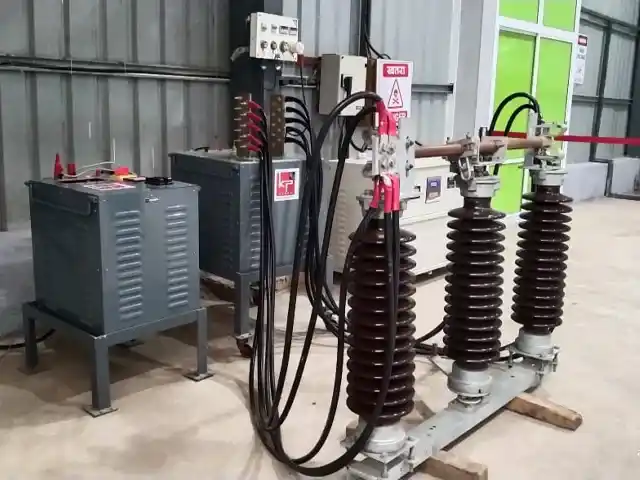
Electrical Isolator

Double Break Isolator/Disconnector
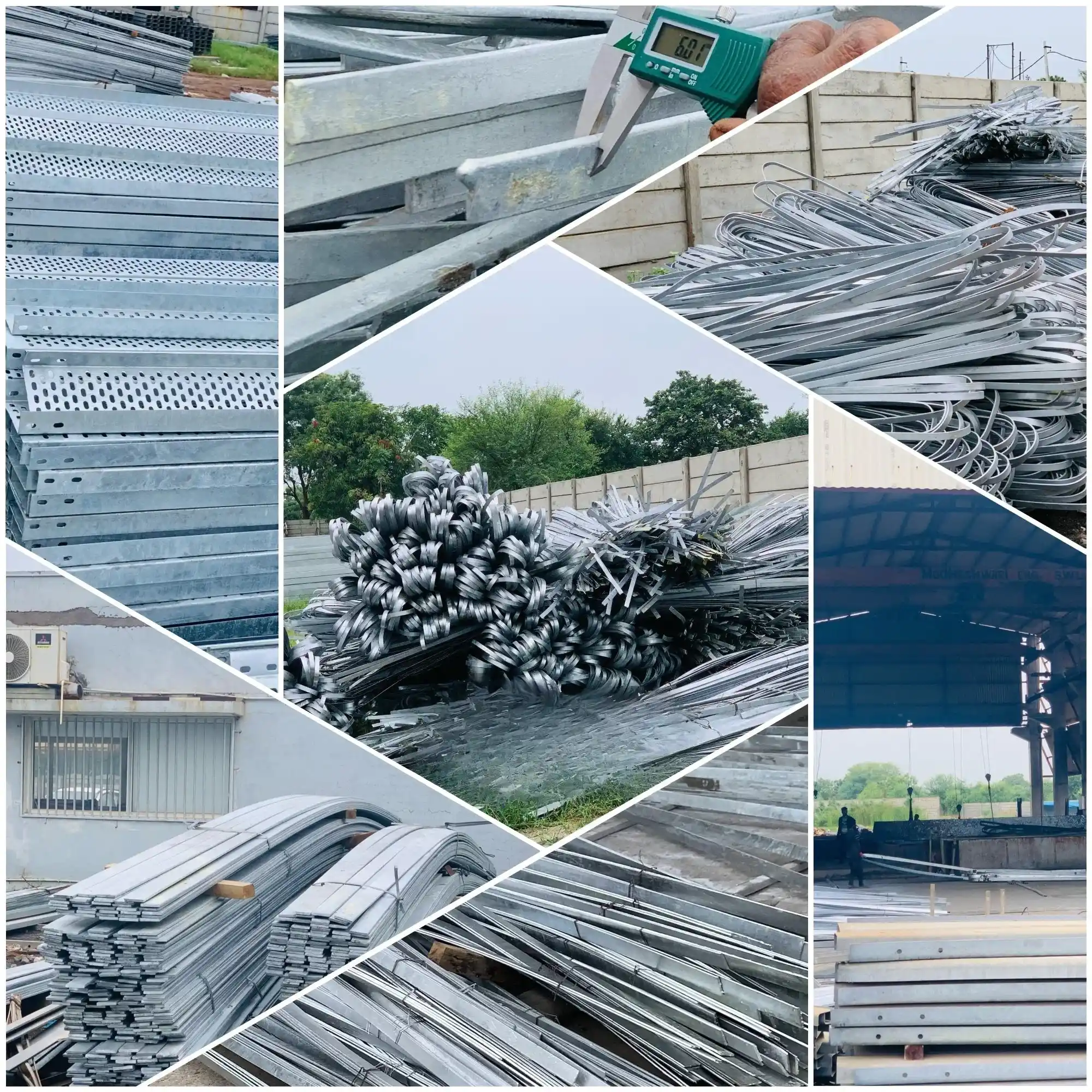
Galvanized Earthing Strips and Flats

Solar Rooftop Solutions
Latest News
Rs 272 Crore Orders! This Green Energy Engineering Stock Wins Contracts Across 3 Key Businesses
KP Group Raises FY32 Ambitions with KP 3.0, Targets 10 GW Each in Owned Generation and EPC
KP Group’s listed renewable businesses post strong multi year growth on the back of disciplined capital allocation, operational efficiency
Recently Uploaded Blogs


